



- Home
- Where we work
- Saudi Arabia
Industrial IoT in Saudi Arabia
Condition monitoring for kilns, pumps and compressors, production data from your PLCs, metering by tenant and tracking for fleets and equipment, on one platform that can run on your own servers inside the Kingdom.
Last updated

What Quoriam does in Saudi Arabia.
Quoriam provides industrial IoT in Saudi Arabia from its base in Doha and currently works with partners in the Kingdom. A project fits sensors to machines, meters and vehicles, connects the PLCs and business systems a site already runs, and delivers condition monitoring, predictive maintenance, smart metering and asset tracking on one platform, hosted on the client's own servers or on cloud in Qatar.
Factories, process plants and utilities across the Kingdom are adding capacity, and maintenance teams are asked to keep more equipment running with the same people. The warning signs of most failures are already there in a machine's vibration, temperature and current. Quoriam reads them all the time and tells the right person while there is still time to plan the repair.
Our most complete predictive maintenance reference is a stoneware manufacturer in Saudi Arabia's Eastern Province, where sensors on the critical kilns flag wear weeks before a failure.
What we monitor in Saudi Arabia.
Predictive maintenance and condition monitoring
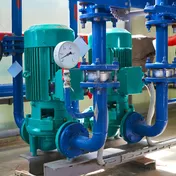
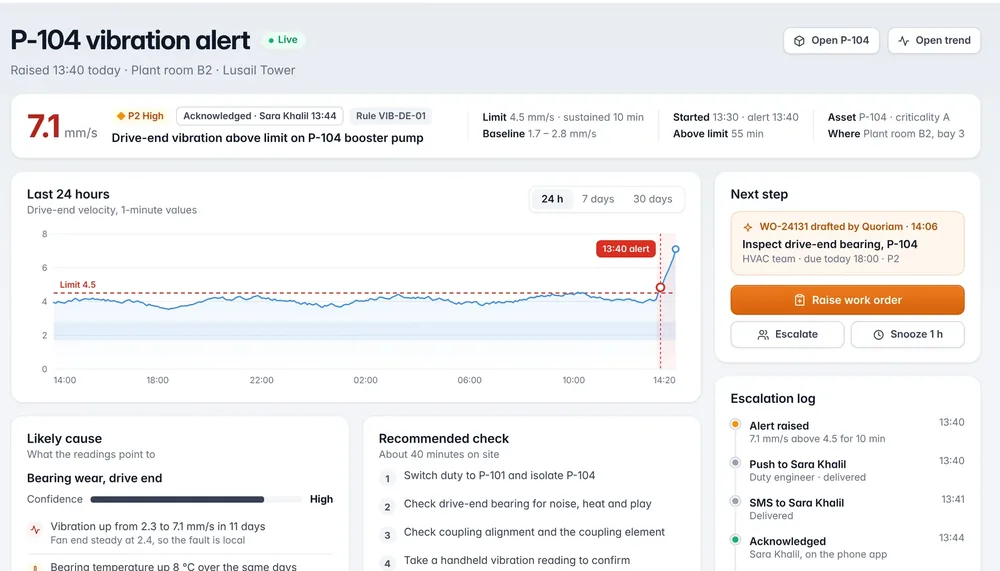
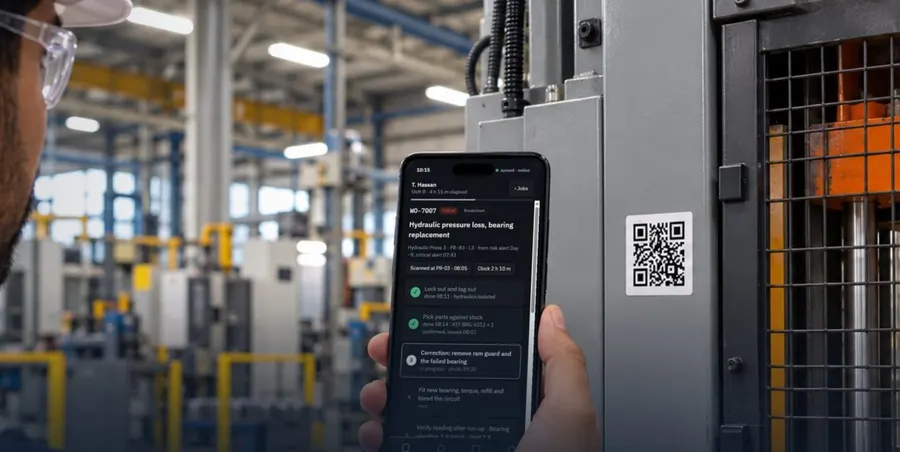
Kilns, fans, compressors and pumps run through long, hot seasons, and a failed bearing on a bottleneck machine stops the line behind it. Vibration, temperature and current sensors on the machines that matter raise a work order for the next planned stop. See predictive maintenance, condition monitoring and vibration monitoring.
Production monitoring for factories
Line status, OEE and downtime reasons come straight from the PLCs on the line, read-only, so every shift is measured the same way. See factory intelligence and OEE monitoring.
Fleet telematics and asset tracking
Routes between regions are long, and fuel, idling and driving behaviour decide what a fleet costs to run. Trackers report position, fuel and driving events, and tags place equipment and containers by zone across yards and sites. See fleet telematics and asset tracking.
Cold chain and reefer trucks
Load temperature is recorded on the road and in the cold room, with an alert while the product is still safe. See cold chain monitoring and reefer truck monitoring.
Smart metering for towers and compounds
Electricity, water and chilled water are metered by tenant or building and read remotely, so each bill rests on a reading. See smart metering and sub-metering and BTU metering.
Remote and hazardous sites
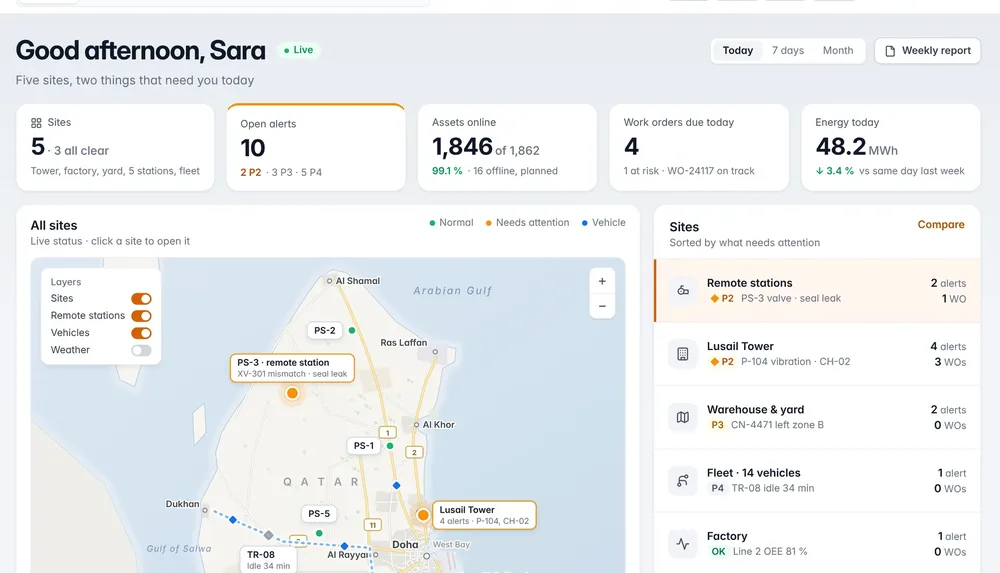
Pump stations, tanks and solar arrays far from the nearest team report to one screen, and classified areas get sensors certified for the zone. See remote monitoring and hazardous area monitoring.
Local requirements we design around.
Three Saudi requirements that shape a monitoring project, and what each means for the design.
| Topic | What applies in Saudi Arabia | What it means for the project |
|---|---|---|
| Personal data | The Personal Data Protection Law, supervised by SDAIA, has applied in full since 14 September 2024 and sets conditions for moving personal data outside the Kingdom | Most monitoring data describes machines and meters. Where drivers or badge holders are identified, Quoriam can run on your own servers inside the Kingdom |
| Hazardous-area equipment | Equipment for potentially explosive atmospheres needs a SASO IECEE/IECEx Recognition Certificate, a requirement in place since 1 November 2021 | Sensors for classified areas are chosen with the certificates the Saudi route accepts. Certification comes from the device maker |
| Food transport | The SFDA's General Requirements for Food Transport set 5 °C or below for chilled dairy and meat, and ask for readings to be recorded continuously | Reefer and cold room monitoring keeps a time-stamped record of every trip and every excursion |
A summary for planning, which your own compliance team should confirm. Sources: DLA Piper for the data law; Intertek for the SASO certificate; the SFDA's General Requirements for Food Transport.
Questions buyers ask.
Something else? Ask us during the free assessment.
Does Quoriam have an office in Saudi Arabia?
Quoriam's office is in Doha, Qatar. In Saudi Arabia we currently work with partners.
Can our data stay inside the Kingdom?
Yes. Quoriam can run on your own servers, on your network, so readings never leave your site. The other option is cloud hosted in Qatar. Your IT team chooses during the assessment.
What do Saudi plants usually monitor first?
The machines a line cannot run without, such as kilns, main fans, compressors and transfer pumps. A few sensors on each are enough to show which one is wearing, and the results decide where to go next.
Does Quoriam connect to SAP?
Yes. Quoriam connects to SAP, Oracle, Microsoft Dynamics and IBM Maximo, so an alert can raise a work order in the system your maintenance team already uses.
Do you work in Arabic?
Yes. Our team works in English and Arabic, and this site is published in both.
What does it cost?
It depends on the number of machines, meters or vehicles and what each one needs. The free three-week assessment ends with a scope and a fixed price.
Elsewhere in the GCC.
The same platform and team, with the local detail for each country.
- United Arab Emirates
Smart metering, BTU metering, chiller and condition monitoring, asset tracking and occupancy for buildings, plants and fleets in the UAE, on one platform.
- Oman
Remote monitoring, condition monitoring, tank and pump station monitoring, fleet and asset tracking for sites spread across Oman, on one IoT platform.
- Kuwait
Condition monitoring, predictive maintenance, hazardous-area sensors, smart metering and fleet tracking for plants, buildings and fleets in Kuwait.
- Bahrain
Production monitoring, condition monitoring, smart metering, cold chain and asset tracking for factories, buildings and logistics operators in Bahrain.
Start with the machines that cost you most.
A free three-week assessment for your site in Saudi Arabia. We review your equipment and the data you already have, then recommend where sensors will pay back first.
We take on two assessments a month.Quoriam is designed to pay back within six months. How we calculate payback