



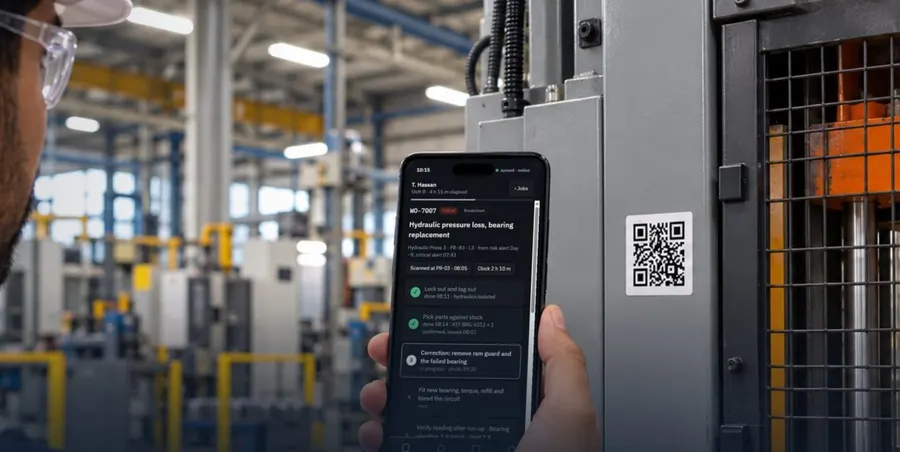
Remote Monitoring in Qatar
One screen for the sites nobody staffs: pump stations, tank farms, valve stations and solar arrays, with an alarm the moment a valve, level, pressure or inverter changes.
Last updated
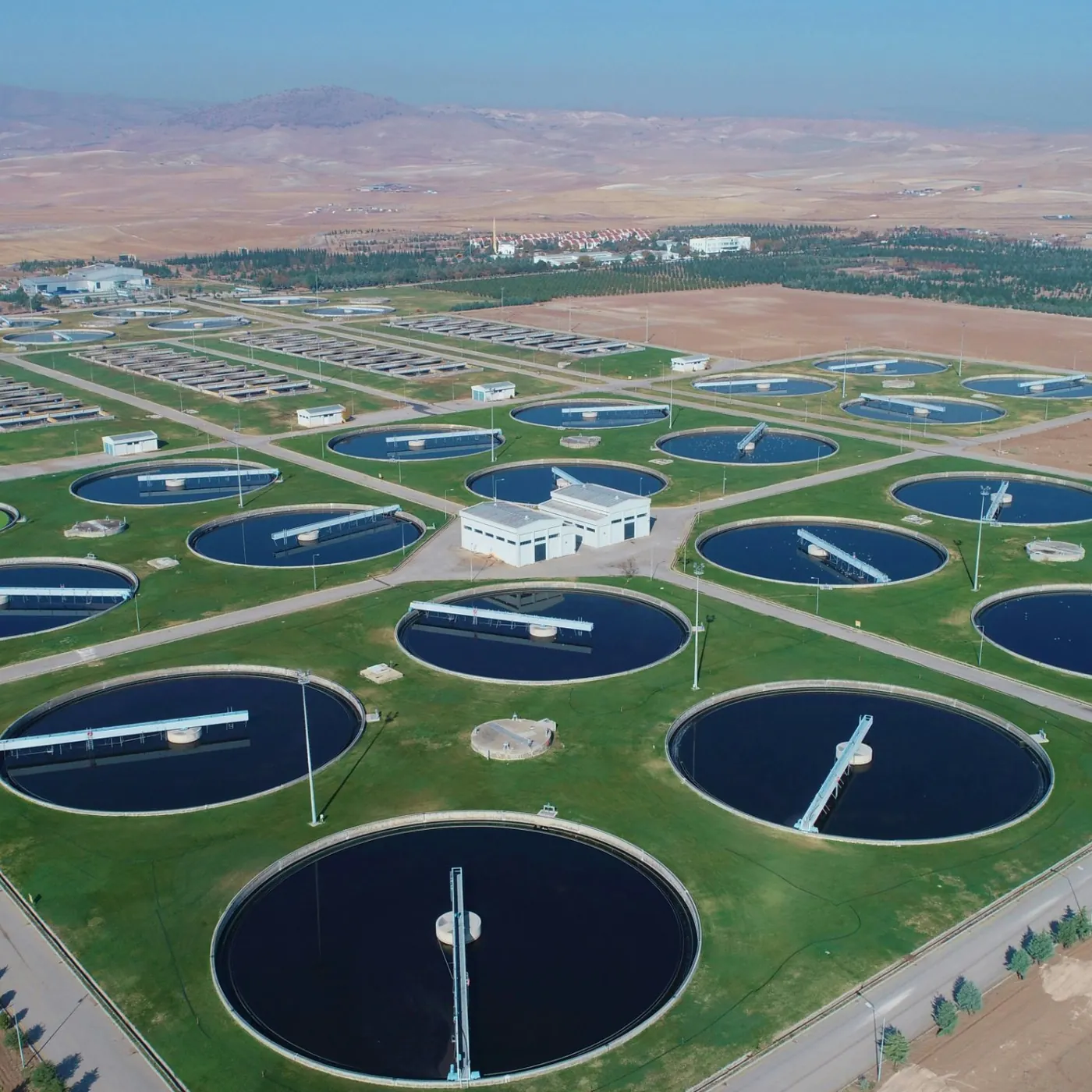
What is a remote monitoring system?
A remote monitoring system reads the state of equipment at sites nobody staffs, such as pump stations, tank farms, valve stations and solar arrays, and brings it to one screen. It raises an alarm when a valve, level, pressure or inverter changes, so your team acts on live readings instead of waiting for the next site round.
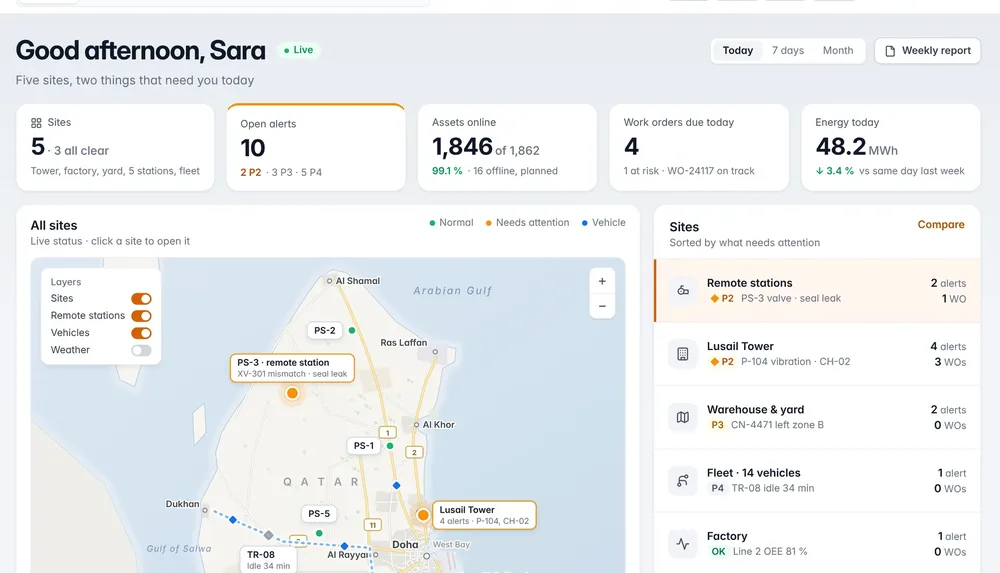
Remote asset monitoring covers the things that sit far from the control room: valve positions, tank levels, pump run states, pipeline pressures, inverter output, cabinet doors and the communications link itself. Quoriam reads what your RTUs, PLCs and SCADA already measure, adds sensors where nothing is measured, and puts every site on one map with one alarm list.
Site rounds
A technician drives out, reads the gauges and drives back. Accurate on the day, blind for the rest of the week.
SCADA at the big sites
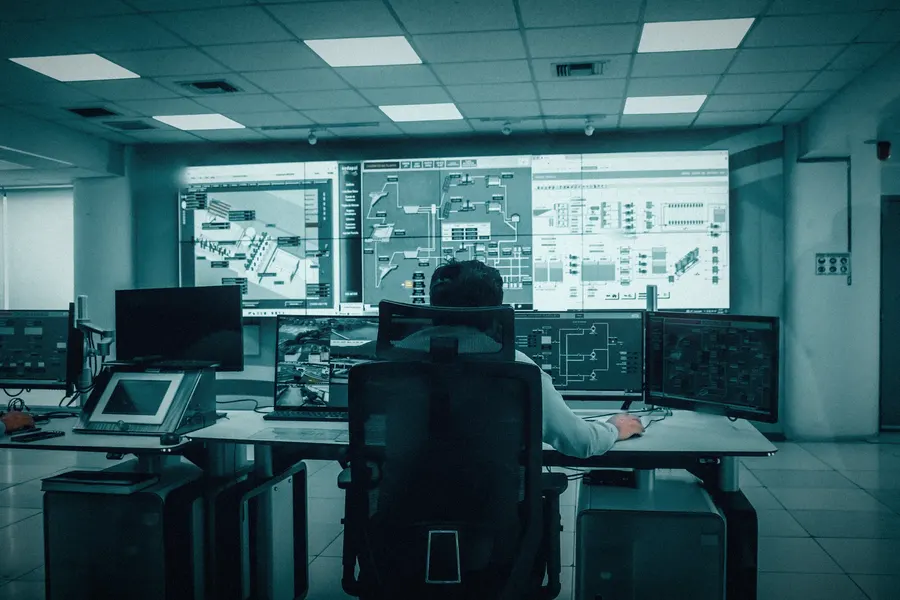
The main stations are covered. The small pump station, the tank at the end of the line and the solar plant often are not.
One remote monitoring system
Every site on one screen, existing SCADA included, with alarms, line-up checks and work orders in the same place.
Sound familiar?
What operations teams in Qatar tell us before we start.
"Two hours to Dukhan to read one gauge."
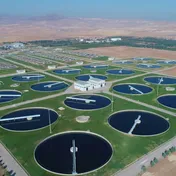
Sites spread from Dukhan to Ras Laffan, Mesaieed and Al Khor. A round to check one pressure or a tripped pump costs a vehicle and a day, in 45 °C summer heat.
"Before every line-up change, someone walks the valves."
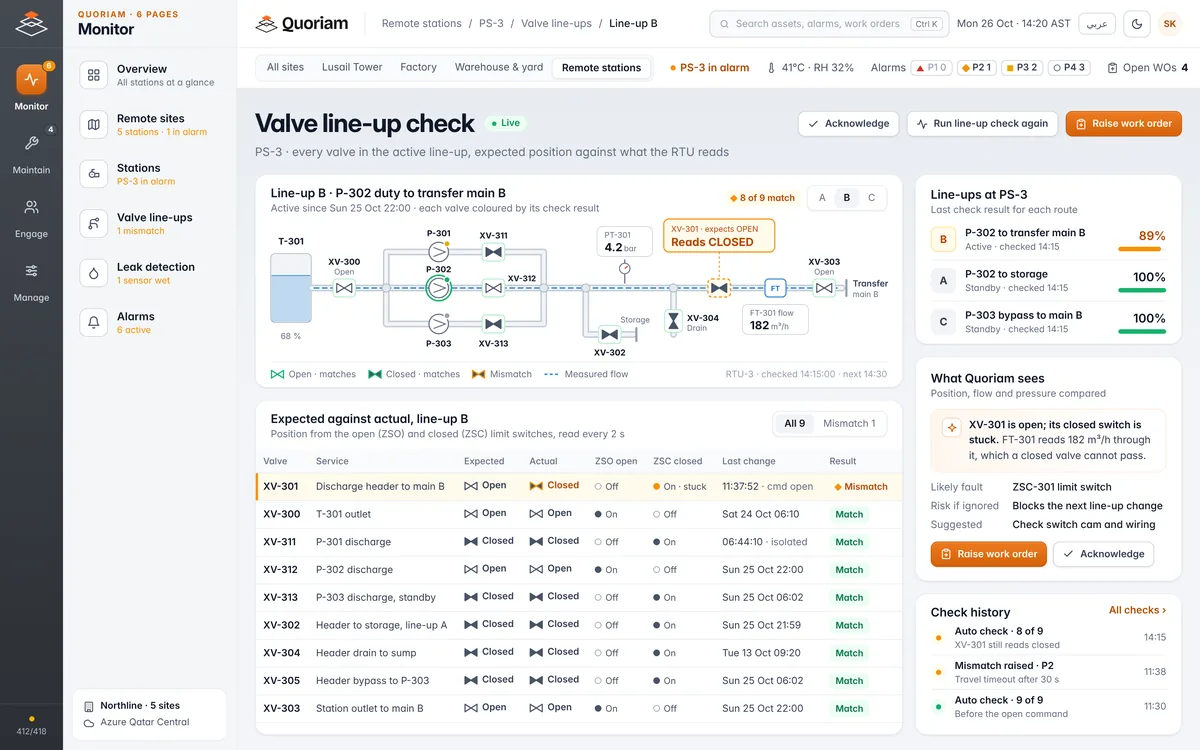
Operations want proof that each valve is where the line-up says it should be. Without position feedback, that proof is a person with a checklist in a valve pit.
"The big stations have SCADA. The small ones have nothing."
The control room sees the main sites in detail and the rest not at all. The first sign of trouble at an unmanned site is often a call from a customer or a dry tank.
What it watches at each site.
The readings we connect first, and what each one tells the duty engineer.
| Asset | What we read | You hear about it when |
|---|---|---|
| Valves | Open and closed limit switches, or a position transmitter, against the active line-up | A valve disagrees with the line-up, or travels too slowly after a command |
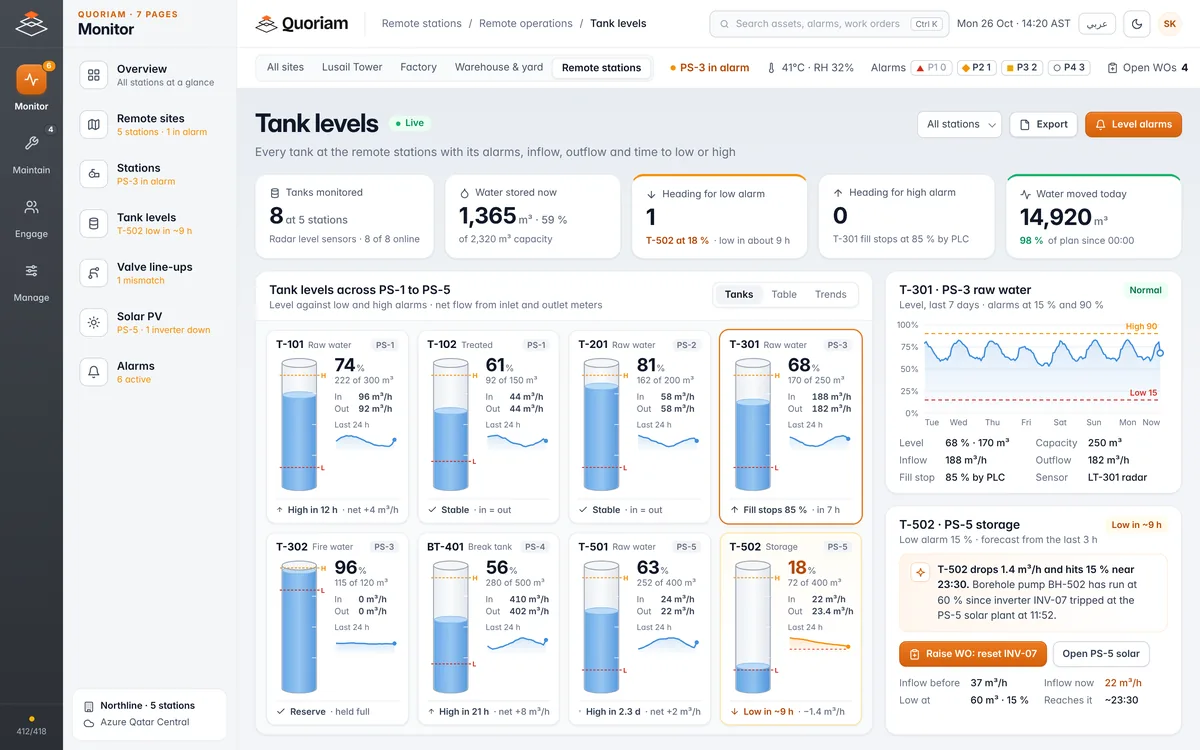
| Tanks | Level from a radar sensor, with inflow and outflow from the meters | A tank heads for its low or high alarm, with the time left to reach it |
| Pumps | Run state, trip, discharge and suction pressure, power | A pump trips, fails to start or runs against a closed valve |
| Pipelines and transfer mains | Pressure and flow at each station, leak sensors in pits and pump bays | Pressure falls where it shouldn't, or a leak sensor reads wet |
| Solar PV | Inverter output, string currents, irradiance and soiling loss | An inverter trips, a string underperforms or dust costs more than a wash |
| The site itself | RTU communications, cabinet doors, mains supply and UPS | Comms drop, a panel door opens or the station runs on battery |
How it works on Quoriam.
From the valve pit to the work order, on one platform.
Connect
Read your existing RTUs, PLCs and SCADA over a read-only connection. Where a site has nothing, fit level, pressure, position and leak sensors and a gateway that reports over 4G or fibre.
Model the site
Enter each station's tanks, pumps, valves and line-ups, so Quoriam knows what normal looks like and which valve positions each line-up expects.
Alert
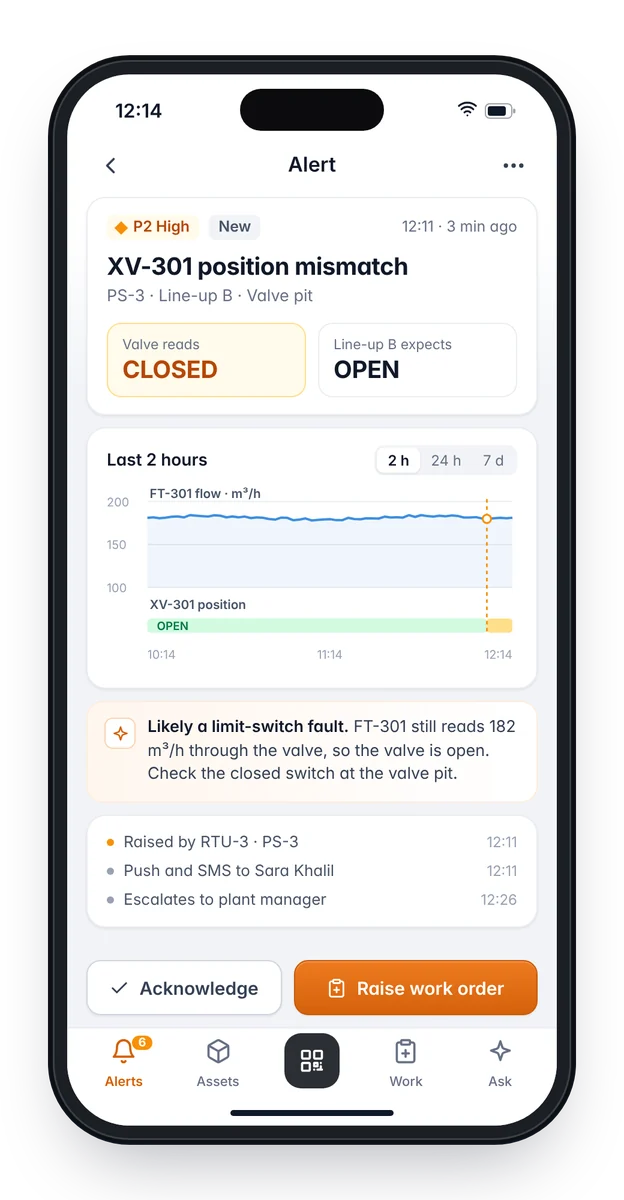
When a reading changes, the right person gets a prioritised alarm in the app, by SMS or by email, with the reading, the trend and what else at the site agrees.
Act
Acknowledge it, raise a work order or open the line-up check. Every alarm is logged with who saw it and when.
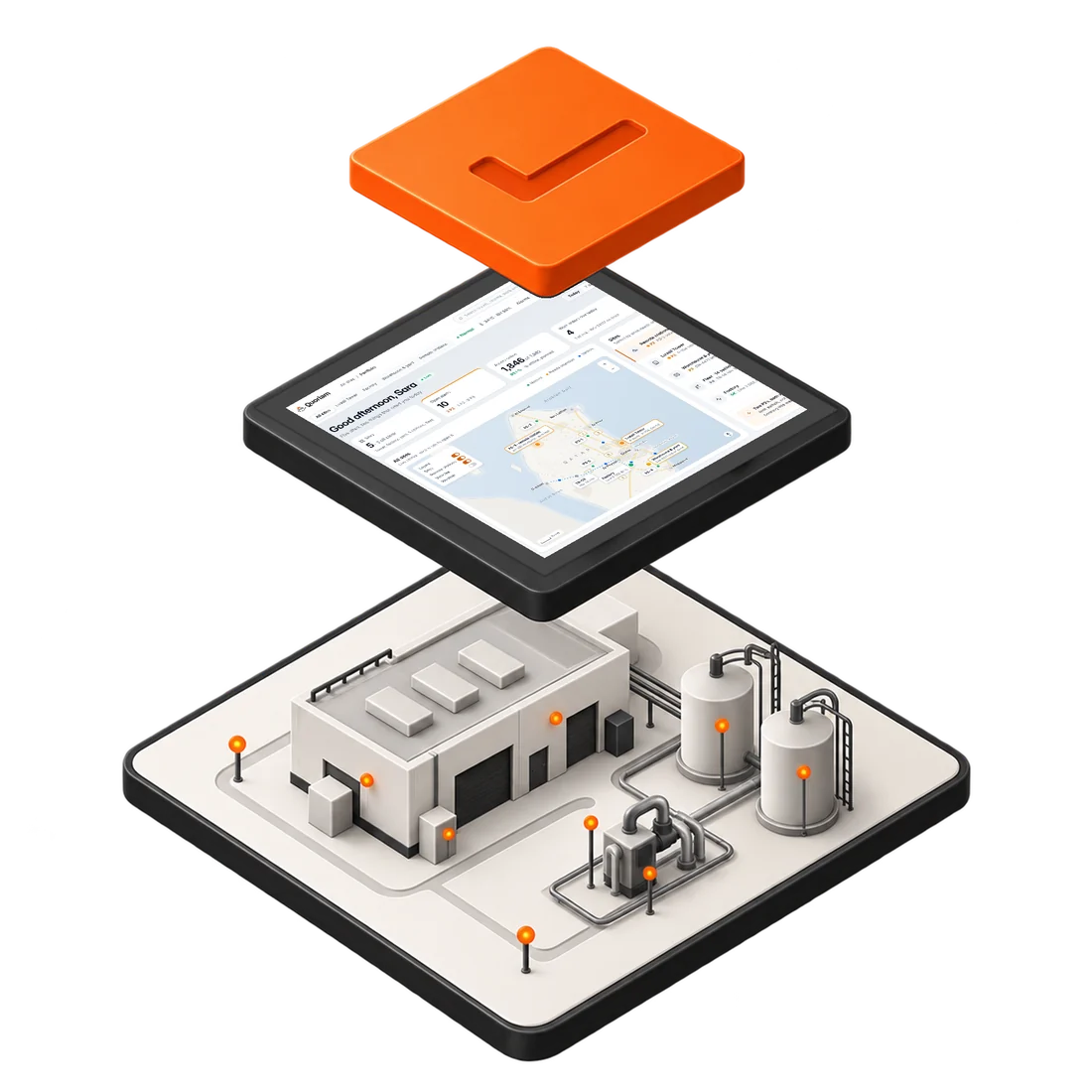
System view
For IT, OT and security reviewers: where the data goes, and how.
- At the siteExisting RTUs, PLCs and SCADA; added level, pressure, valve position and leak sensors where needed
- At the stationEdge gateway or RTU reporting over 4G, fibre or the site LAN
- NetworkCellular, fibre or site LAN, encrypted and kept apart from the control network
- Quoriam platformOn your premises or cloud hosted in Qatar
- Your team and systemsApp, SMS and email alarms with escalation; work orders to Quoriam or your CMMS; data shared with the control room
What your team sees.
Every remote site on one map, and the detail behind each alarm.
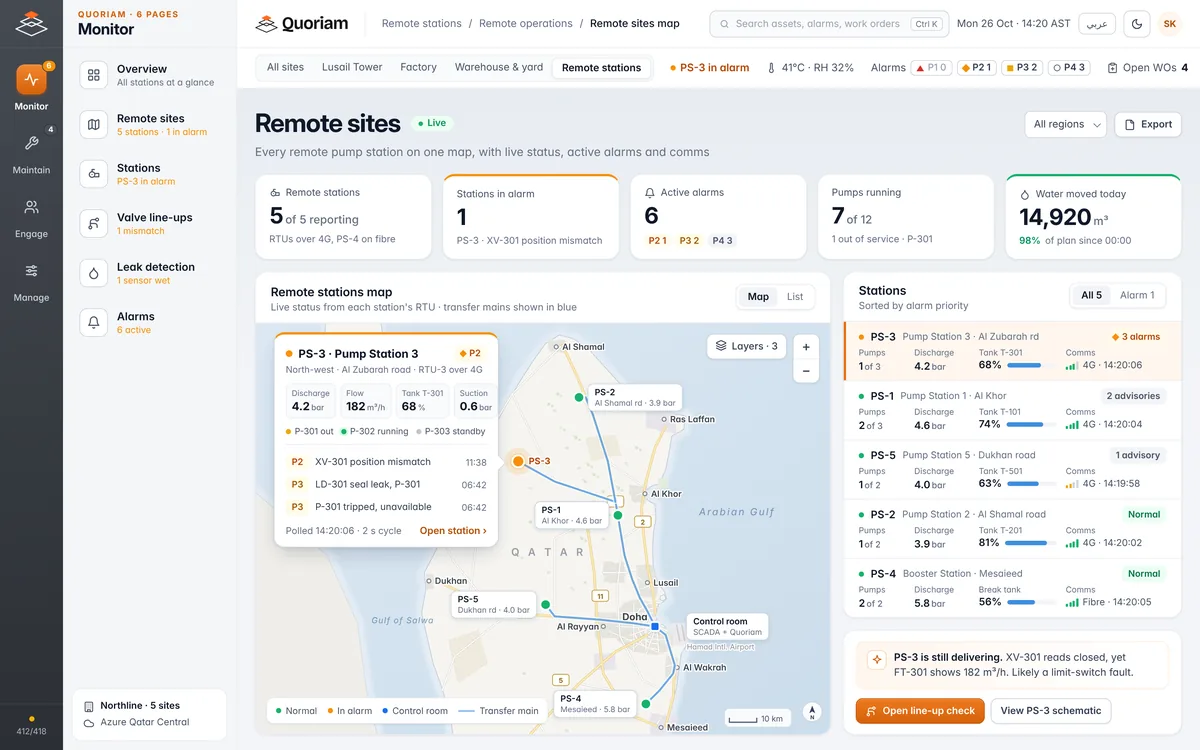
Away from the control room.
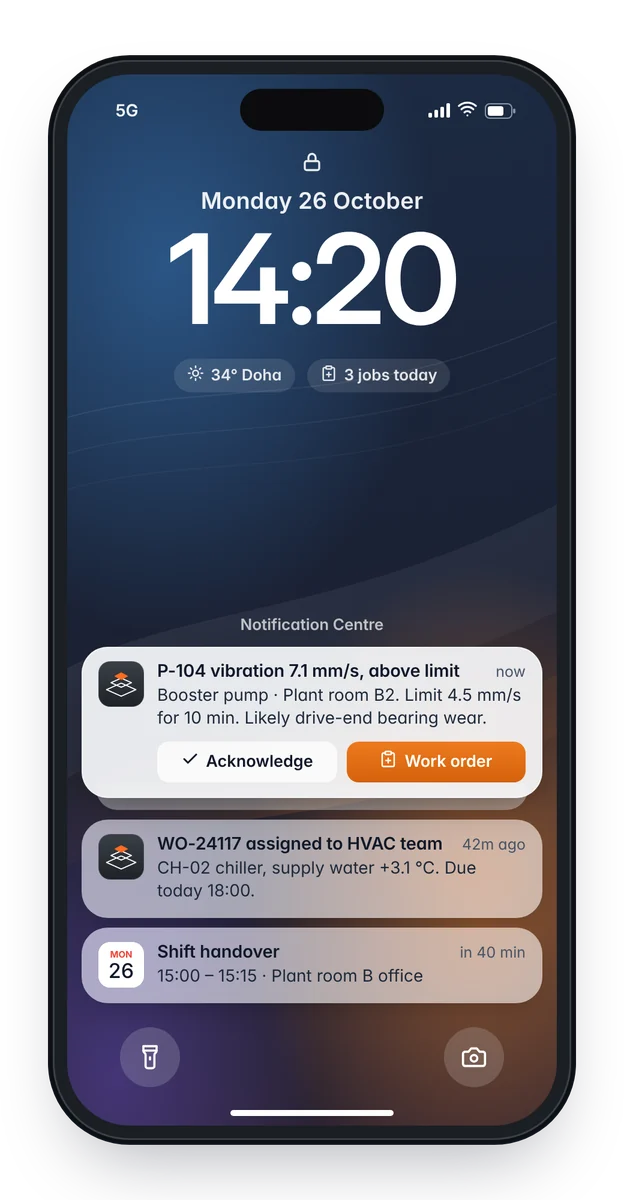
The duty engineer gets the alarm on their phone with the evidence attached, acknowledges it or raises a work order, and can ask Quoriam about any asset in English or Arabic.
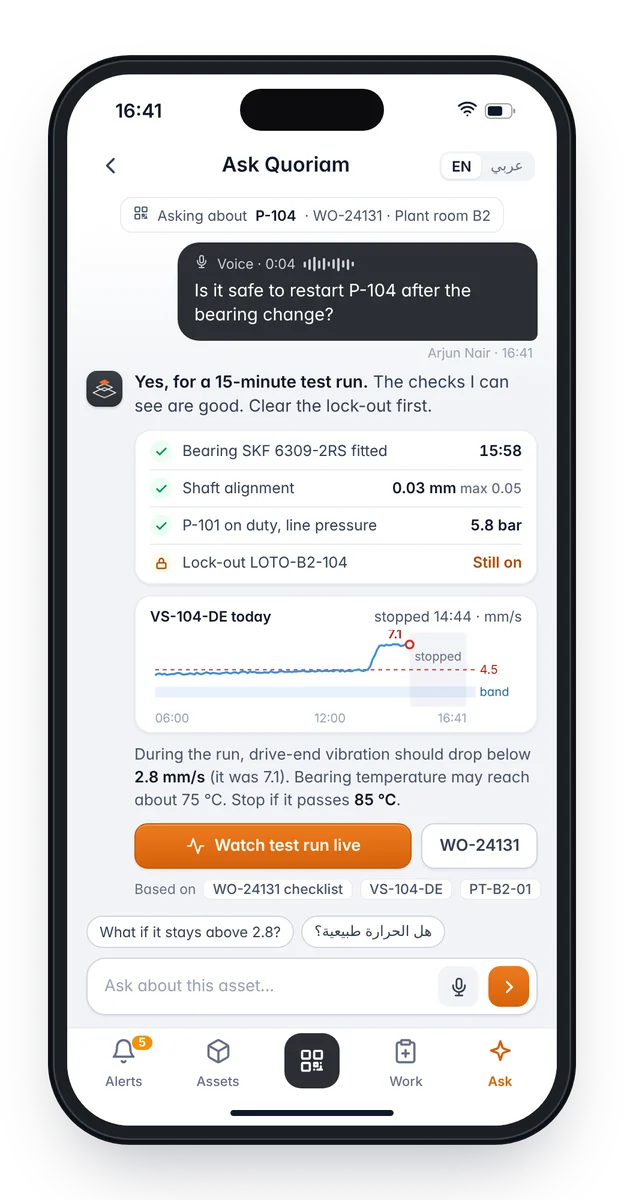
Or just ask.
Quoriam AI answers questions about your sites in plain language and turns the answer into an action.
Remote monitoring use cases.
Start with the sites you visit most often and see least.
- Tank level monitoring
Water, diesel and chemical tank levels read remotely, with low-level and leak alarms.
- Pump station monitoring
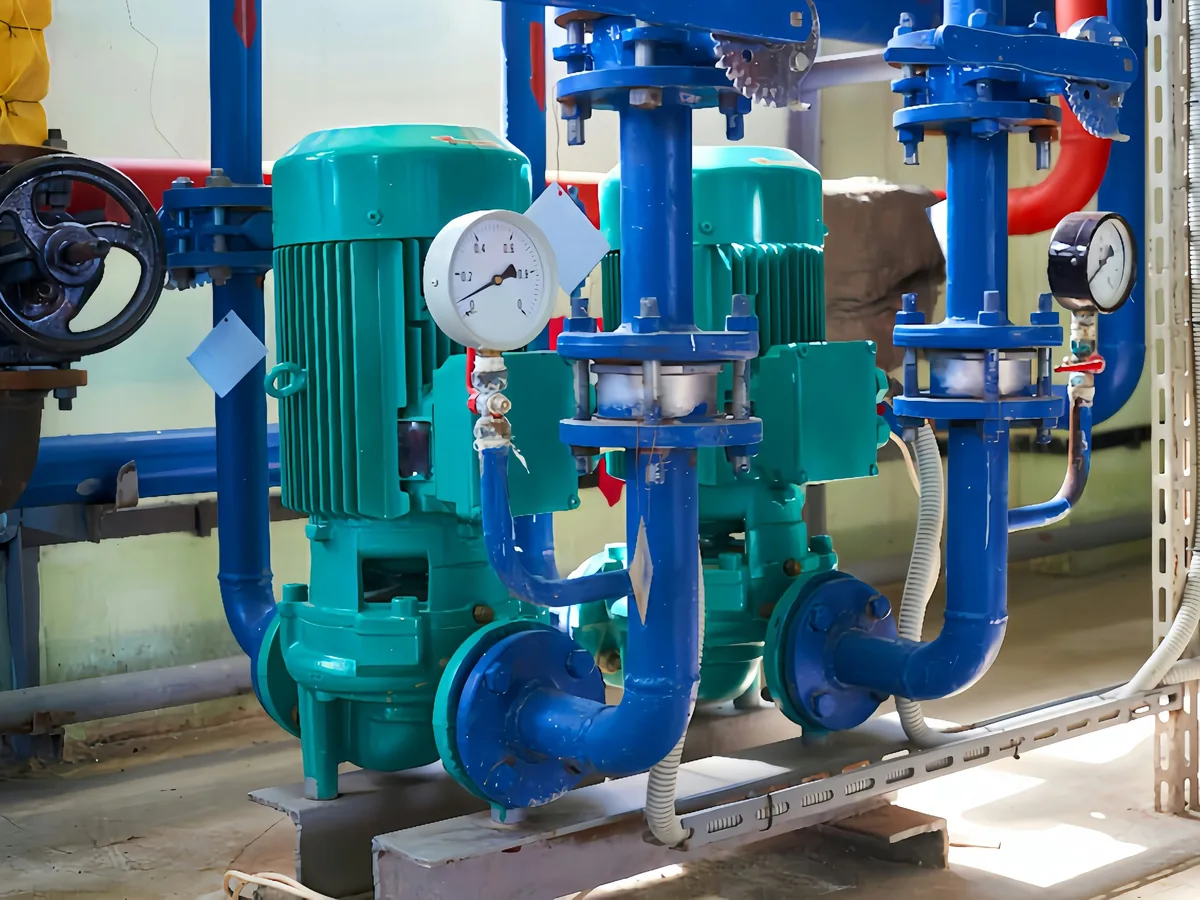
Run status, pressure, flow and power at unmanned pump stations.
- Valve position monitoring
Open, closed or in between, for every critical valve, without a site round.
- Solar PV monitoring
Inverter output, string performance and soiling losses across solar sites.
- Fire pump monitoring
Fire pump status, test runs and alarms recorded for the fire safety file.
Hardware and integrations.
We connect what each site already has and fit sensors only where nothing is measured.
- Valve positionLimit switches or position transmitters on actuated and manual valves
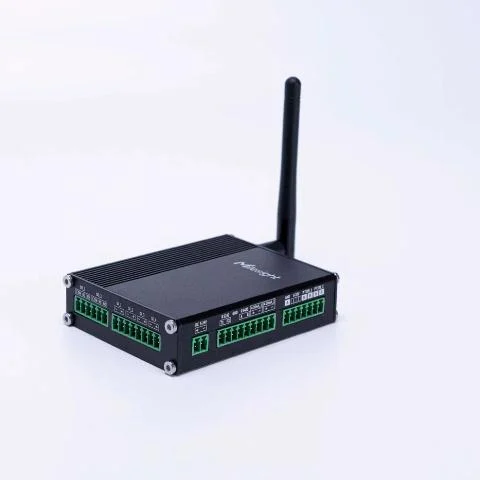
- Tank levelNon-contact radar on water, diesel and chemical tanks
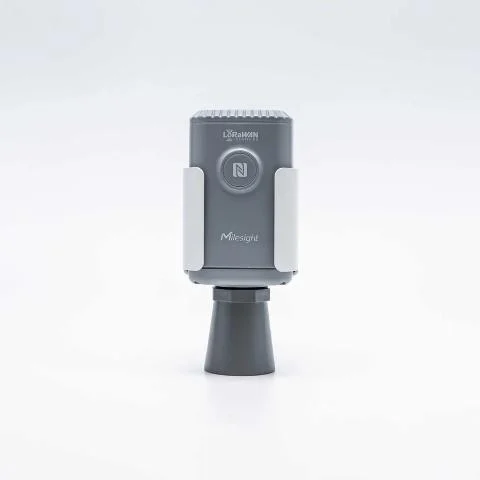
- Pressure and leak sensorsDischarge, suction and line pressure; leak sensors in pits and bays
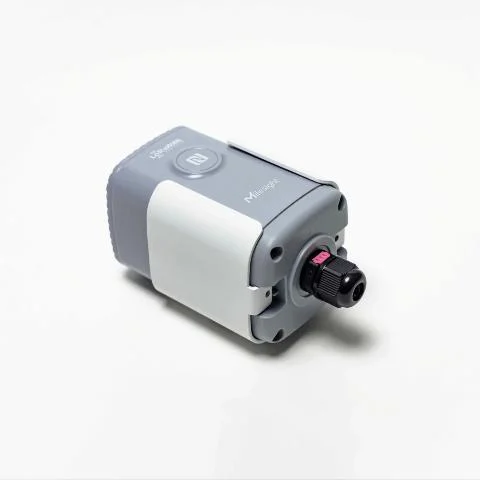
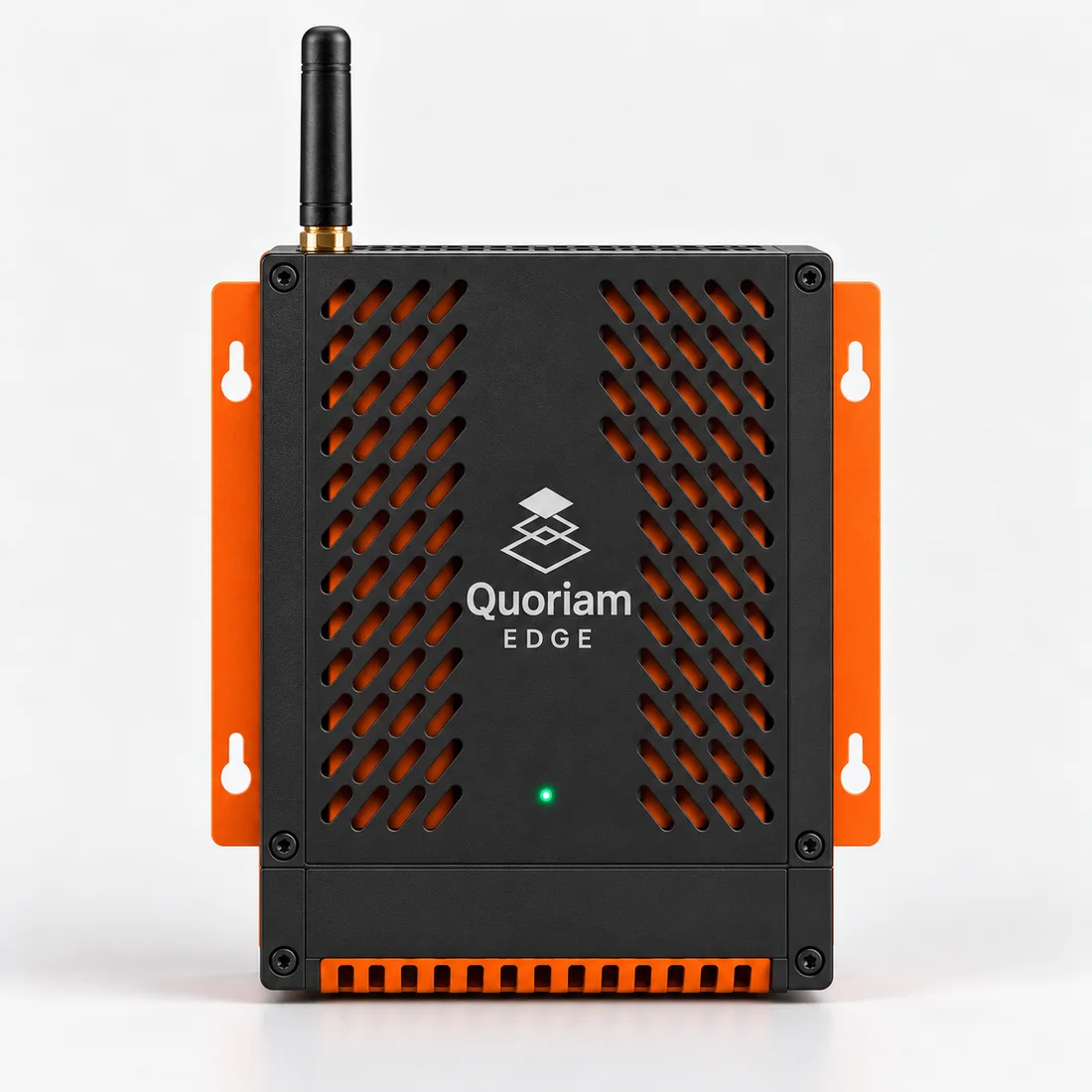
- GatewaysQuoriam Edge QE35, over 4G, fibre or LoRaWAN
- Reads from
- RTUs, PLCs and SCADA over Modbus TCP and OPC UA, read-only; solar inverters and meters over Modbus
- Work orders to
- Quoriam's own work orders, or IBM Maximo, SAP and other CMMS
- Alerts by
- Quoriam app, SMS and email, with priorities and escalation if nobody acknowledges
Hardware agnostic. Makes we fit includeMilesightFootfallCamTeltonikaAdvantechWe can work with any maker and choose the device for each site. The platform reads them all.
What a first deployment covers.
An example, not a project result.
Example scope: five unmanned pump stations
Two stations already on SCADA and three with nothing, brought onto one screen.
- Stations with SCADA: a read-only link to the existing RTUs for pumps, pressures, levels and valve positions
- Stations without: radar level on each tank, discharge pressure, pump run state and a gateway over 4G
- Critical valves: open and closed position feedback, checked against each line-up
- Leak sensors in pump bays and valve pits
- Alarms prioritised P1 to P4, to the duty engineer's app, escalating to the operations manager
- Work orders raised from the alarm and closed with the reading back to normal
Where it's used.
The same platform, set up in each industry's terms.
Questions buyers ask.
Something else? Ask us during the free assessment.
What is the difference between remote monitoring and SCADA?
SCADA supervises and controls a process, usually from a control room. Remote monitoring here means watching and alerting: Quoriam reads from SCADA where it exists, covers the sites it doesn't reach, and adds line-up checks, alarm history and work orders. It does not send control commands to your plant.
We already have SCADA. Do we need to replace it?
No. Quoriam connects read-only to your existing RTUs, PLCs or SCADA and leaves the control system as it is. Sites with no SCADA get sensors and a gateway, and both kinds appear on the same screen.
How does the valve line-up check work?
Each line-up lists the position every valve should be in. Quoriam compares that list with the open and closed limit switches every few seconds and flags any valve that disagrees, along with other readings, such as flow, that show which one is wrong.
How many sensors do we need?
It depends on what each site already measures. A station on SCADA may need nothing new; a bare site typically needs a level sensor per tank, a pressure reading per pump set, position feedback on the critical valves and one gateway. The free assessment counts it site by site.
What if the mobile signal drops at a remote site?
Quoriam watches the link itself and alarms when a site stops reporting.
Can it monitor solar PV sites?
Yes. Quoriam reads inverter output and string currents, compares the plant's yield with what the irradiance says it should be, and shows the losses from dust, heat and tripped inverters, so you can decide when a wash pays back.
What does it cost?
It depends on the number of sites, what they already have and how they connect. The free three-week assessment ends with a scope and a fixed price for your sites.
Add next on the same platform.
Every solution plugs into the one you start with. One login, one set of alarms.
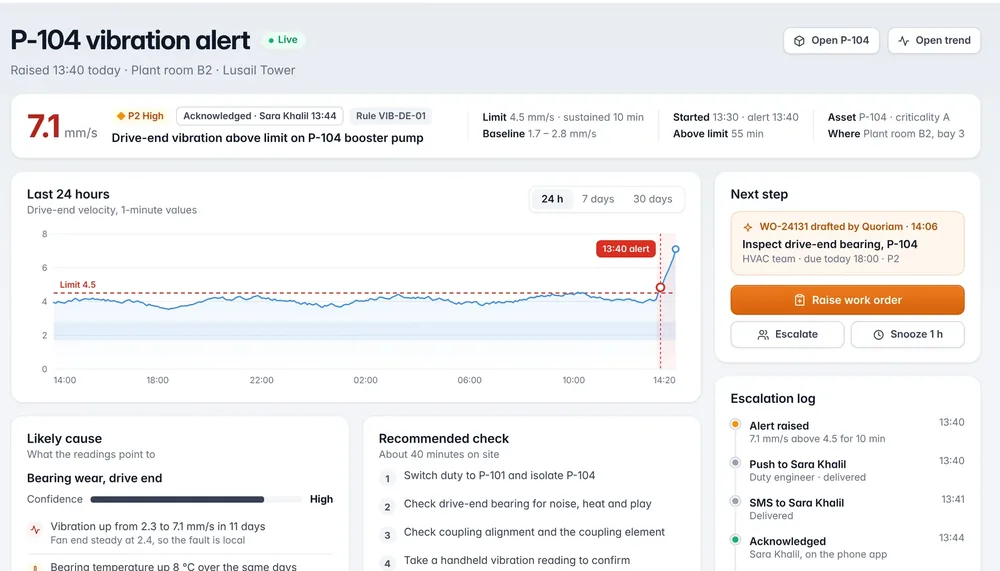
 P-104 Vibration 7.1 mm/s
Predictive maintenance
Catch bearing wear, overheating and imbalance weeks before a pump, motor or chiller fails.
 BTU-17 +22% on last month
Smart metering and sub-metering
Meter electricity, water and chilled water by tenant or line, and settle every bill on evidence.
 CN-4471 Left zone B at 14:02
Asset tracking and geofencing
Know where equipment, tools and containers are, and get an alert the moment one leaves its zone.
Start with a pilot.
Prove it on your own sites before you commit to the whole network.
- Remote sites chosen with your team in the assessment
- Sensors, gateways and connections supplied, fitted and commissioned by our engineers
- How long it runs is agreed with you, typically around eight weeks
- The results to look for are agreed at the start and reviewed with you at the end
See every remote site from one screen.
A free three-week assessment. We review your sites, what they already measure and how they connect, then recommend where remote monitoring will save the most site visits.
We take on two assessments a month.Quoriam is designed to pay back within six months. How we calculate payback