






- Home
- Solutions
- Predictive maintenance
- Condition monitoring
Condition Monitoring in Qatar
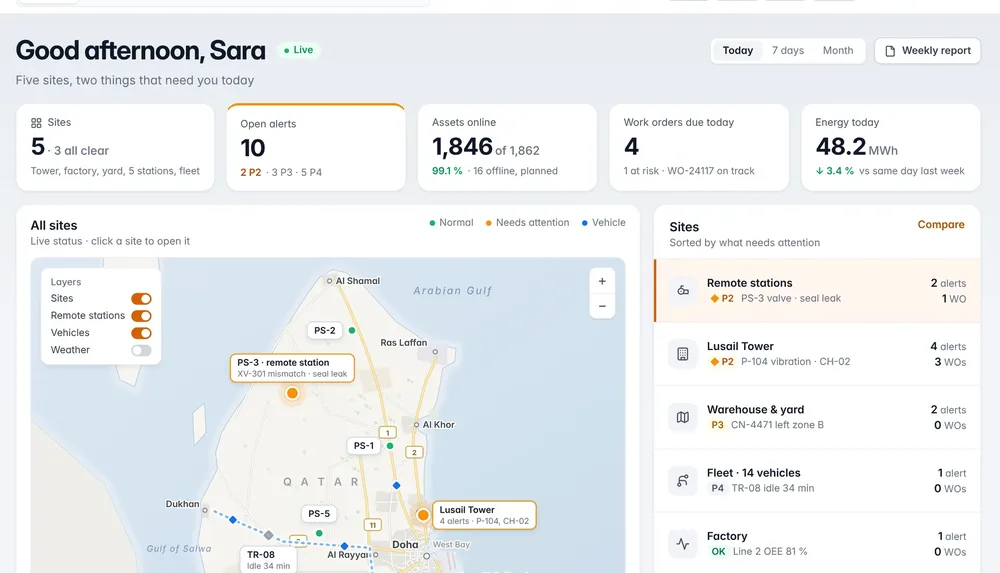
Fixed sensors on your pumps, motors, fans, chillers and compressors that read vibration, temperature, current and pressure around the clock, so your team knows the state of every critical machine between one site round and the next.
Last updated
What is condition monitoring?
Condition monitoring is the practice of measuring a machine's health while it runs, using readings such as vibration, bearing temperature, motor current and pressure. Each reading is compared with that machine's own normal and its limits, so a change that points to wear is seen early and the repair is planned before the machine stops.
ISO 17359 gives the general guidelines for setting up a condition monitoring programme: list the machines, rank them by what a failure would cost, choose what to measure on each one, set the limits and review the results (ISO). Quoriam follows that sequence and keeps the readings, limits and actions for every machine in one place.
Condition monitoring is the measuring half of predictive maintenance. Predictive maintenance adds the action: an alert to the right person and a work order raised for the next planned stop.
Route-based surveys
A technician walks the plant with a handheld meter each month or quarter. The readings are sound, and a fault that starts the week after a visit waits until the next one.
Online condition monitoring
Fixed sensors read every few minutes and send the results to one platform. A change is seen within hours, on every machine, including the ones nobody visits.
Specialist tests
Oil analysis, thermography and ultrasound are carried out by specialists at set intervals. They stay in the programme and are most useful when online readings show where to look.
What is measured, and what it shows.
Each reading answers a different question about the machine. Read together, they tell one fault from another.
| Reading | What a change points to | Where the sensor goes |
|---|---|---|
| Vibration | Bearing wear, imbalance, misalignment, looseness and pump cavitation | On the bearing housings of the motor and the driven machine. See vibration monitoring |
| Temperature | A bearing short of lubrication, a winding running hot or a blocked cooling path | On bearing housings and motor frames, often in the same sensor as vibration |
| Motor current | Load rising at the same duty, one phase drawing more than the others, or a sudden loss of load | Clamp-on sensors on the supply cables. See motor current monitoring |
| Pressure and flow | A pump running away from its duty point, a blocked strainer or lost suction | On suction and discharge lines, or read from the plant's own transmitters |
| Run hours and starts | A duty machine carrying all the hours while its standby sits unused, or frequent starts that shorten motor life | Taken from current sensors or the machine's controller |
| Controller data | Alarms and operating points the machine already records, such as a chiller's approach temperatures | Read from the controller over BACnet or Modbus, read-only |
How a programme is set up.
Rank the machines
We list your rotating equipment with your maintenance team and rank it by what a failure costs in lost cooling, water or production. Monitoring starts with the machines at the top of that list.
Fit and connect
Each machine gets the sensors its failure modes call for, and a gateway in the plant room sends the readings to the Quoriam platform. Controllers that already hold useful data are read over their own protocol, read-only.
Set the limits
Alarm limits start from the published zones for the machine's type and size, then tighten to that machine's own normal once Quoriam has a few weeks of data.
Alert and act
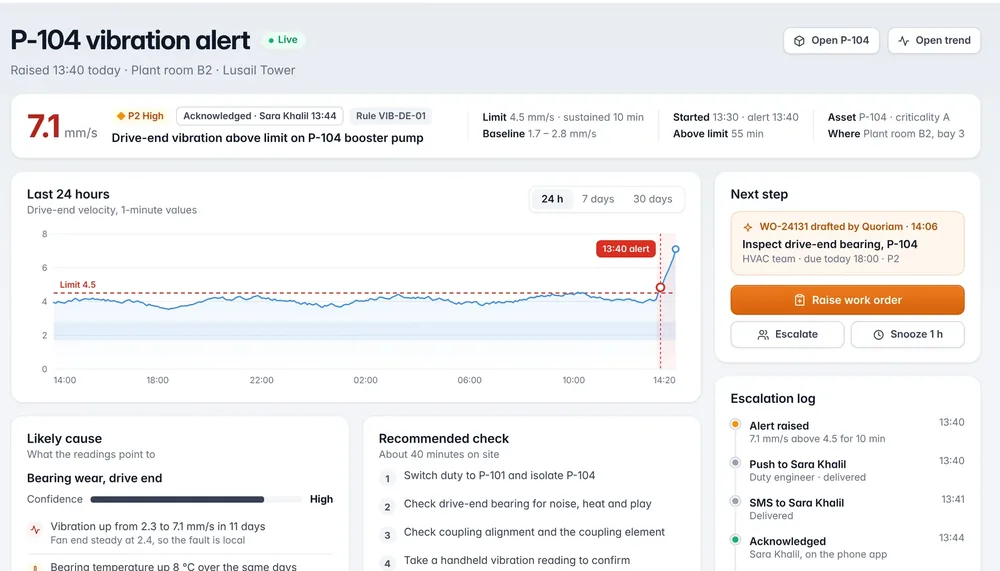
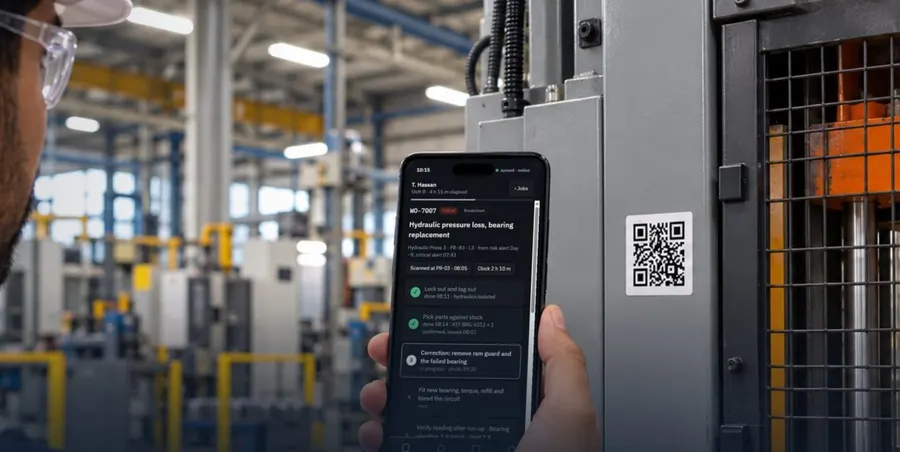
When a reading leaves its band, the duty engineer gets an alert with the likely fault, and a work order goes to Quoriam or your CMMS for the next planned stop.
System view
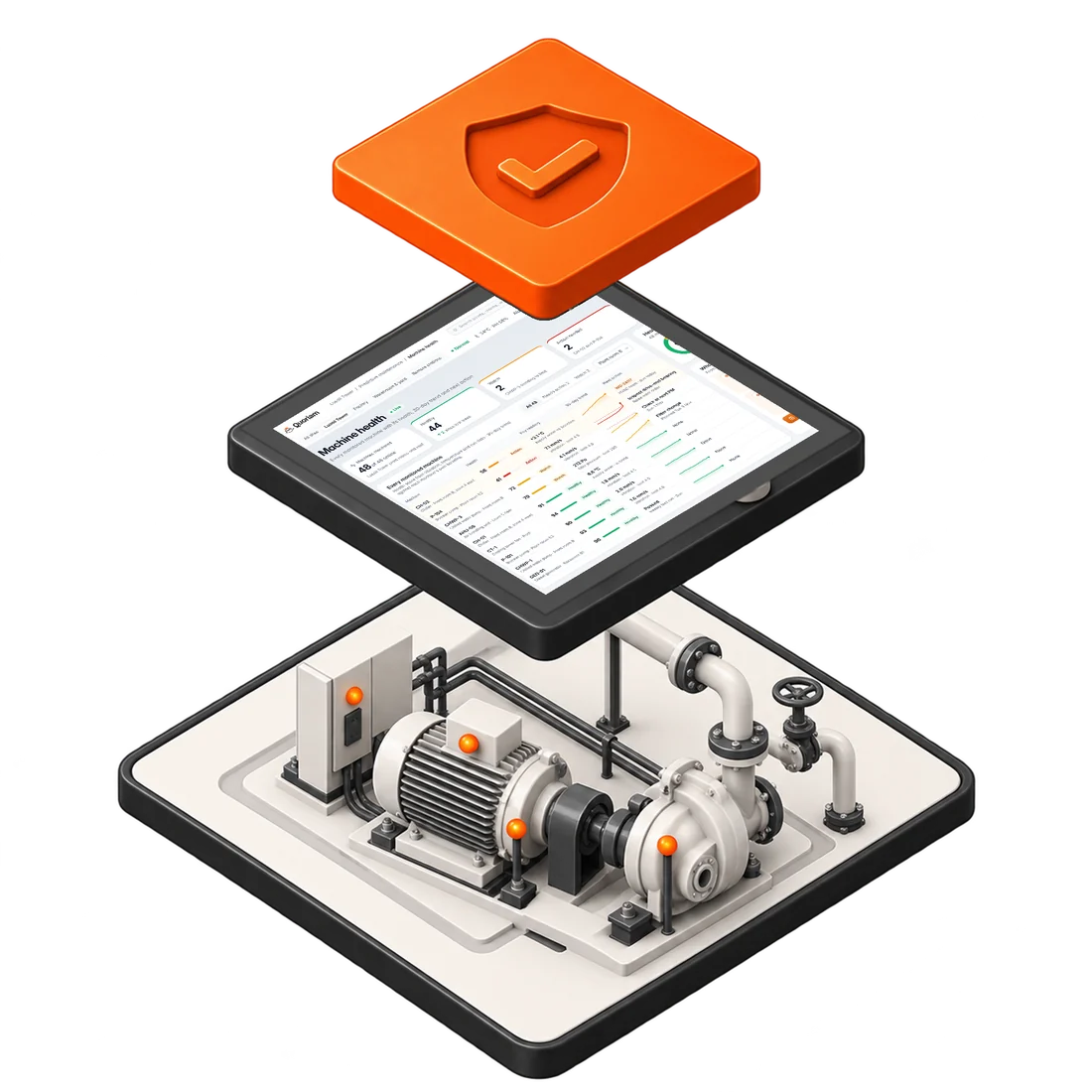
For IT, OT and security reviewers: where the data goes, and how.
- On the machineWireless vibration, temperature and current sensors
- In the plant roomLoRaWAN gateway, one per plant room or cluster of machines
- NetworkSite LAN or cellular, encrypted and kept apart from the control network
- Quoriam platformOn your premises or cloud hosted in Qatar
- Your team and systemsApp, SMS and email alerts; work orders to your CMMS; data back to the BMS
What your team sees.
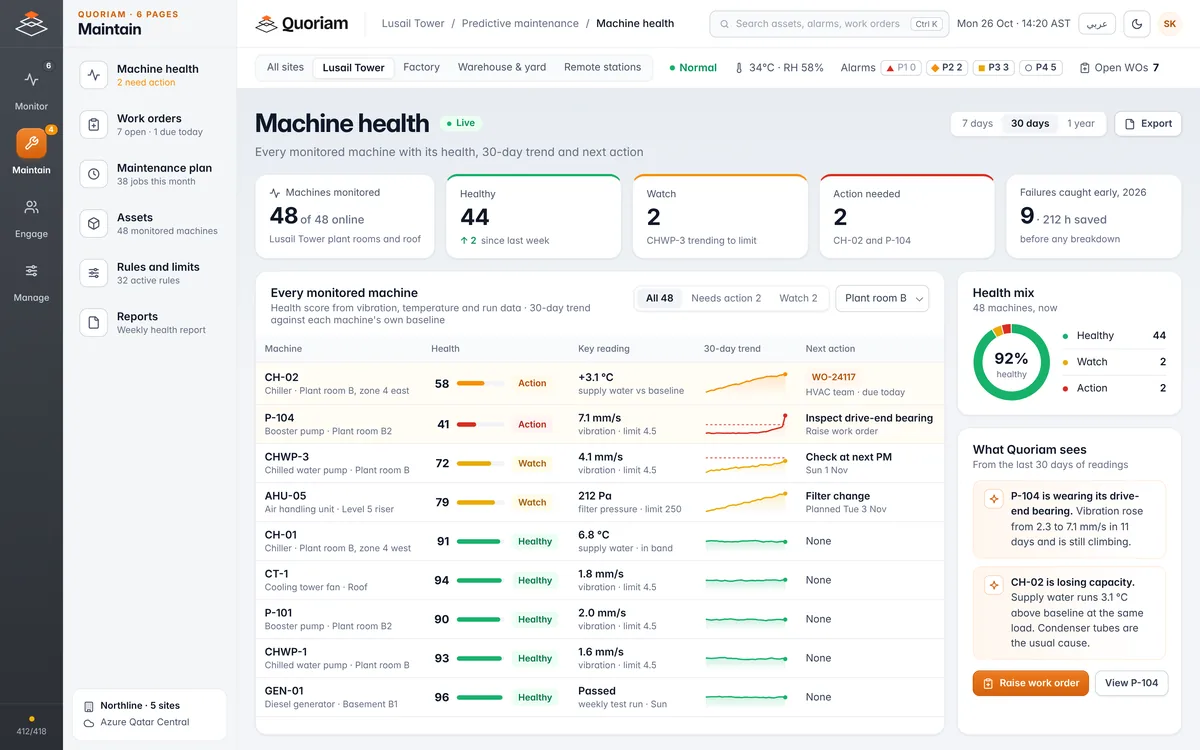
Every reading on the machine it belongs to, with the history behind it.
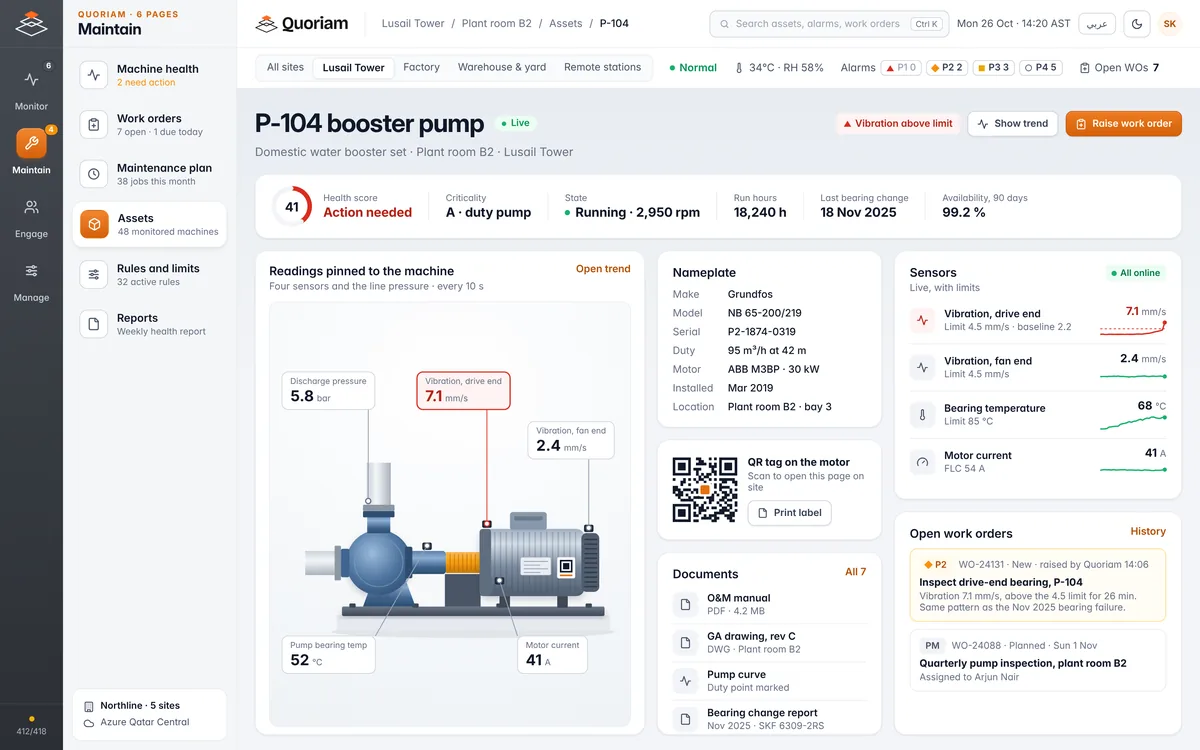
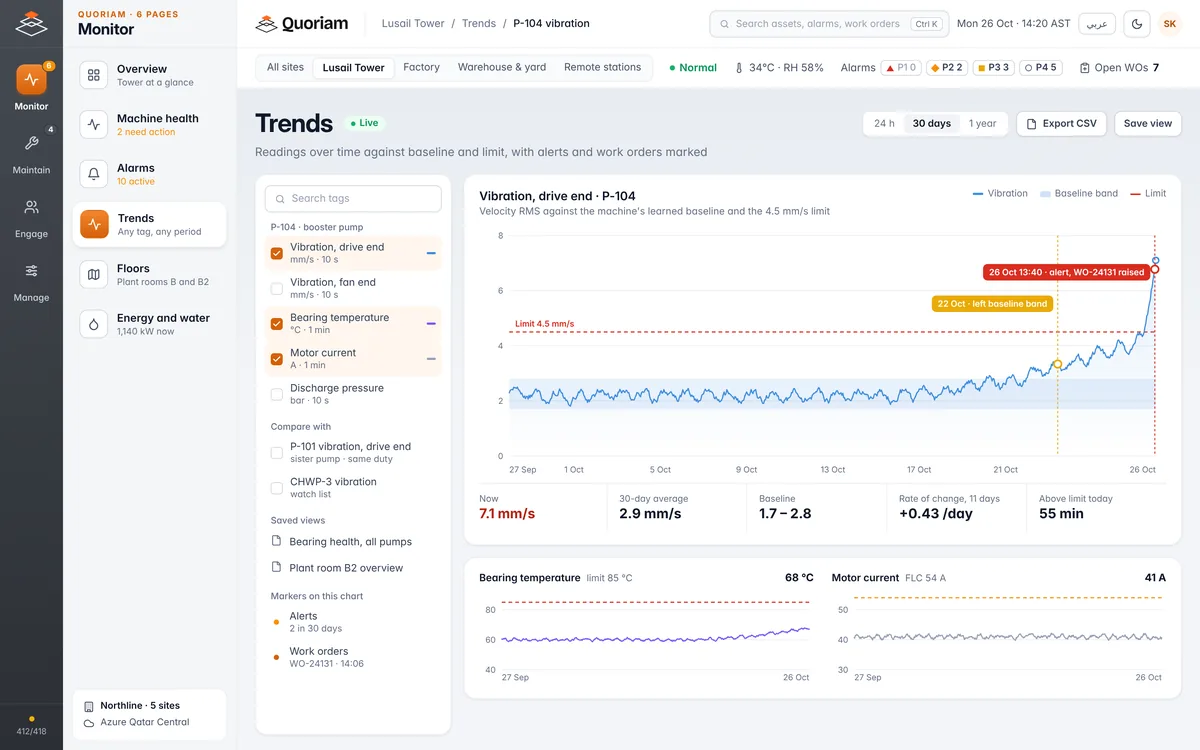
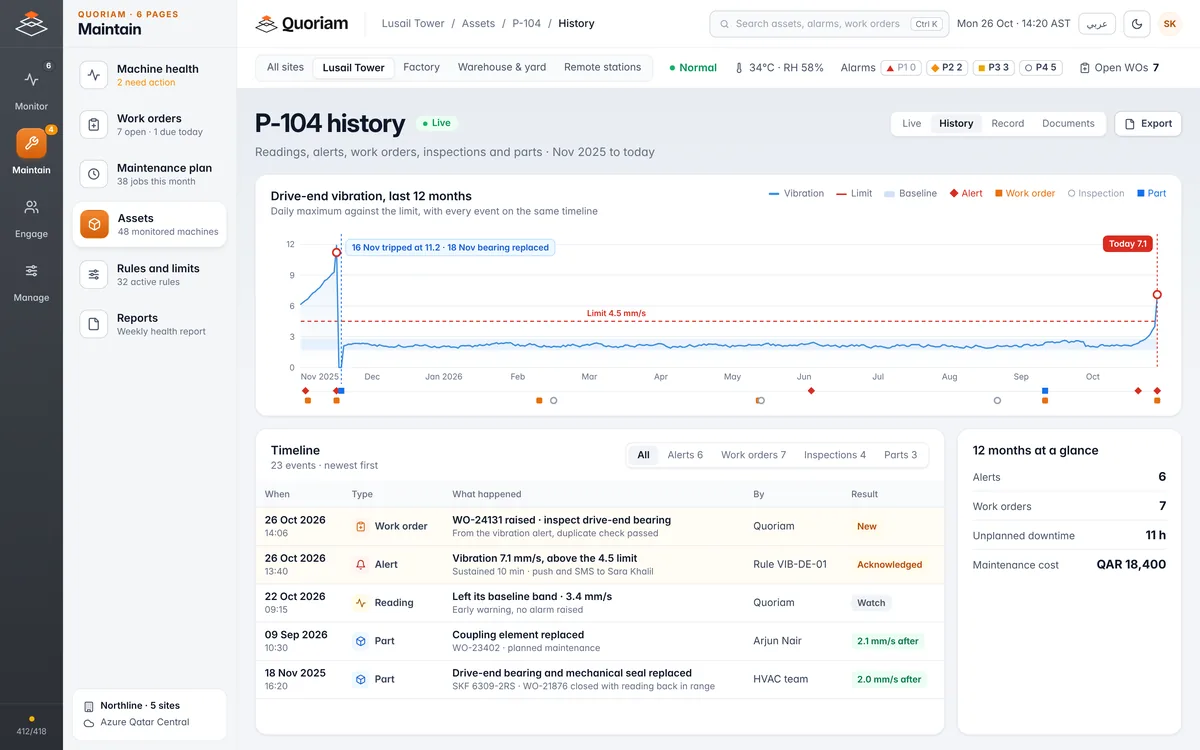
Or just ask.
Quoriam AI answers questions about machine condition in plain language and turns the answer into a work order.
Where condition monitoring is used in Qatar.
Wherever one stopped machine stops cooling, water or production.
Towers, malls and hospitals
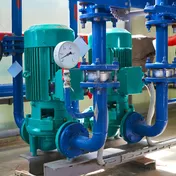
Chillers, chilled water pumps, air handling unit fans and booster sets that keep a building occupied through the summer.
Facilities and smart buildingsDistrict cooling and utilities
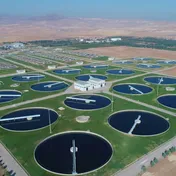
Compressor motors, condenser water pumps and cooling tower fans running at peak load for months on end.
Utilities and district coolingOil, gas and energy
Pumps, fans and compressors across process and utility areas, with certified sensors where the area is classified as hazardous.
ATEX and hazardous area monitoringFactories
Kiln fans, extruders, conveyors and gearboxes, where one failed bearing holds up the whole line.
Manufacturing
Questions buyers ask.
Something else? Ask us during the free assessment.
What is the difference between condition monitoring and predictive maintenance?
Condition monitoring measures the health of a machine while it runs. Predictive maintenance uses those measurements to decide when to service it, and raises the work in time for a planned stop. Quoriam does both on one platform, so the reading, the alert and the work order sit together.
Which machines are worth monitoring?
The ones whose failure stops cooling, water or production, and the ones with no standby. We rank your equipment by the cost of a failure with your maintenance team, and monitoring starts with the machines at the top of that list.
How many sensors do we need?
It depends on the machine. A critical pump set usually gets a vibration and temperature sensor on the motor and on the pump, and a current sensor on the supply. A small fan or a machine with a standby often needs one sensor. One gateway usually covers a plant room. The free assessment gives you the exact count and price.
Do we still need route-based vibration surveys?
Many sites keep a specialist survey for detailed diagnosis on their largest machines and use online monitoring to cover everything between visits. The online readings also show the surveyor which machines to look at first.
Can you monitor old machines with no controller?
Yes. Wireless sensors fix to the bearing housing or clamp around the supply cables, so the age and make of the machine do not matter. Newer machines with a controller are read over BACnet or Modbus as well.
Does condition monitoring work in hazardous areas?
Yes, with sensors certified for the zone. See ATEX and hazardous area monitoring for how the equipment is selected.
What does it cost?
It depends on the number of machines and the readings each one needs. The free three-week assessment ends with a ranked machine list, a sensor count and a fixed price.
Related.
Condition monitoring is the measuring half of predictive maintenance on the Quoriam platform.
- Predictive maintenance
Catch bearing wear, overheating and imbalance weeks before a pump, motor or chiller fails.
- Vibration monitoring
Bearing wear, imbalance and misalignment on pumps, motors, fans and compressors.
- Pump and motor monitoring
Vibration, temperature and current on the pumps that keep water and cooling moving.
- Current and power monitoring
Motor load and phase imbalance from clamp-on current sensors.
Find out which machines to monitor first.
A free three-week assessment. We rank your rotating equipment by the cost of a failure, review the data you already have and recommend where sensors will pay back first.
We take on two assessments a month.Quoriam is designed to pay back within six months. How we calculate payback