



- Home
- Solutions
- Remote operations monitoring
- Tank level monitoring
Tank Level Monitoring in Qatar
Live levels for the water, diesel and chemical tanks at your remote sites, with the hours left before each one reaches its low or high alarm.
Last updated
What is a tank level monitoring system?
A tank level monitoring system reads how full each tank is, all the time, with a radar, ultrasonic or pressure sensor, and sends the level to one screen. Compared with inflow and outflow, the level shows how long until the tank runs low or overflows, and catches leaks and unexplained drops between site visits.
It is the usual starting point for remote monitoring, because a tank is where trouble upstream shows first. A tripped pump, a stuck fill valve or a slow leak all end in a tank that runs dry or spills. Paired with the inflow and outflow meters, the level tells you where the tank will be tonight, which is the number the duty engineer needs.
What it catches.
What a level reading reveals, and when you hear about it.
| Event | What the level shows | When you hear about it |
|---|---|---|
| Running low | Level falling faster than inflow can replace it | Hours ahead, with the time it will reach the low alarm |
| Overfill | Level still rising after the fill should have stopped | Before it reaches the high alarm or the overflow |
| Leak | Level falling while the outlet meter reads zero, or a reserve tank slowly dropping | Within a few readings, instead of at the next site round |
| Unrecorded draw or diesel theft | A step drop in a fuel tank while the generator it feeds is not running | As it happens, with the time and the volume lost |
| Supply failure upstream | Inflow falling while demand stays the same | With the cause, such as a tripped pump, where Quoriam can see it |
Radar, ultrasonic or hydrostatic.
The right sensor depends on what is in the tank and what sits above it.
| Sensor | How it measures | Suits | Watch for |
|---|---|---|---|
| Radar | Times a microwave reflection from the surface; air temperature and vapour don't affect it | Water, diesel and most chemicals | Nozzle position, and ladders or pipes that cause false echoes |
| Ultrasonic | Times a sound echo from the surface | Open or vented water tanks with a clear path | Vapour, foam, condensation and air temperature, which change the echo |
| Hydrostatic | A probe near the bottom reads the pressure of the liquid above it | Narrow tanks, sumps and wells | Liquid density, deposits on the diaphragm, cable wear |
Sources: VEGA, 80 GHz radar vs ultrasonic and Dutco Tennant, radar vs ultrasonic vs hydrostatic level transmitters.
How it works.
Fit or connect
Where the station's RTU or PLC already reads the level, we connect to it. Where it doesn't, we fit a sensor and a gateway that reports over 4G or fibre.
Model each tank
Enter its capacity, alarm levels and the meters and pumps that feed it, so a level becomes cubic metres and a time to low or high.
Alert and act
The duty engineer gets the level, net flow and forecast time, then acknowledges, raises a work order or sends a tanker. Every alarm is logged.
System view
For IT, OT and security reviewers: where the data goes, and how.
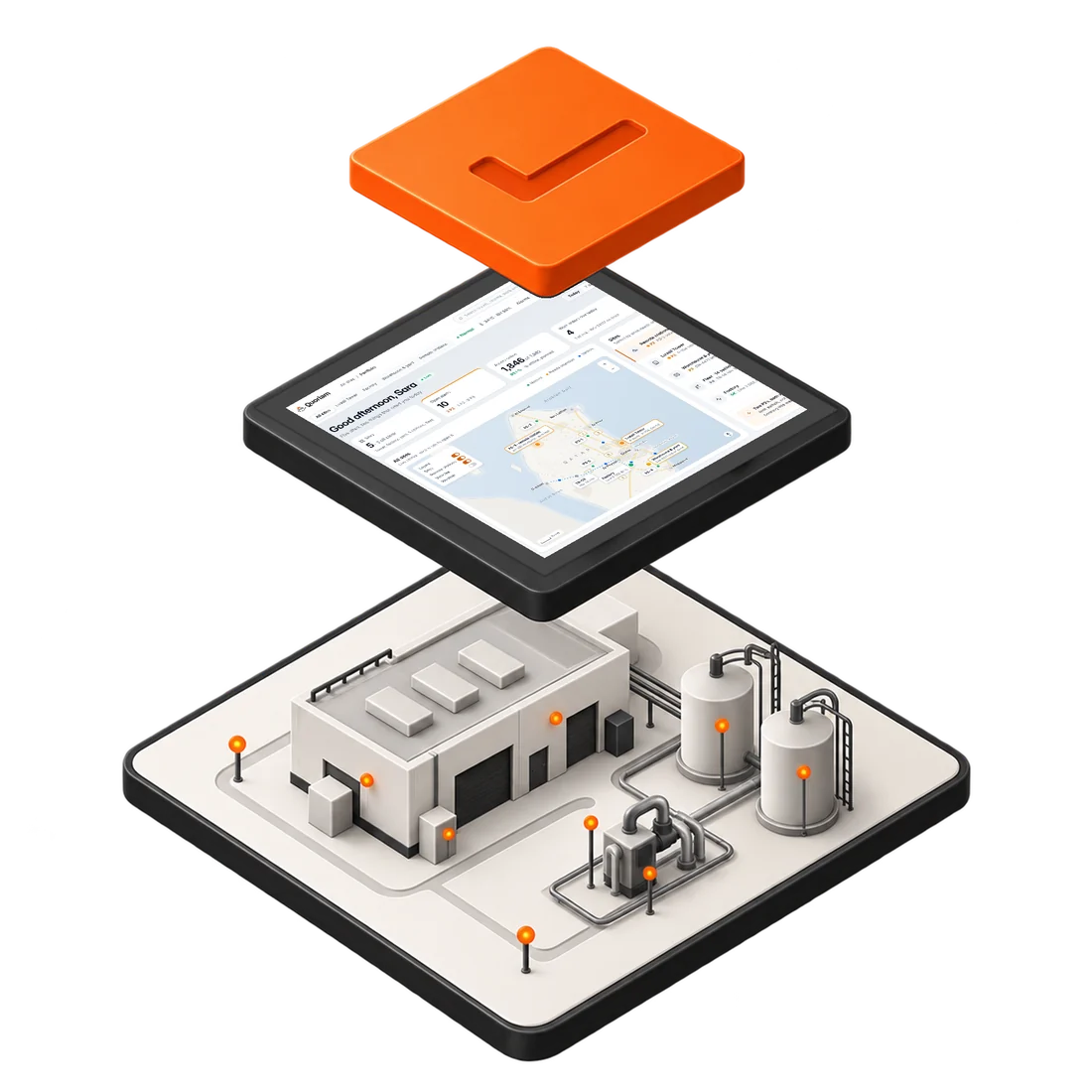
- On the tankRadar, ultrasonic or hydrostatic level sensor; leak sensors in bunds and pits
- At the stationExisting RTU or PLC, or a Quoriam Edge gateway over 4G or fibre
- NetworkCellular, fibre or site LAN, encrypted and kept apart from the control network
- Quoriam platformOn your premises or cloud hosted in Qatar
- Your team and systemsApp, SMS and email alarms; work orders
The hardware we fit.
One level sensor per tank, chosen for what it holds, fitted by our engineers.
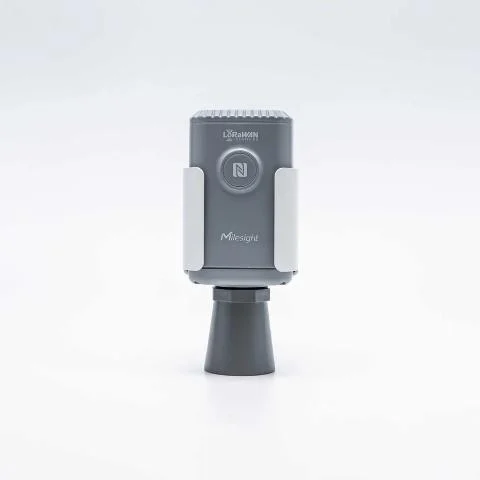
- Tank levelNon-contact radar on water, diesel and chemical tanks; ultrasonic or hydrostatic where they suit better
- Leak sensorsIn bunds, valve pits and pump bays around the tank
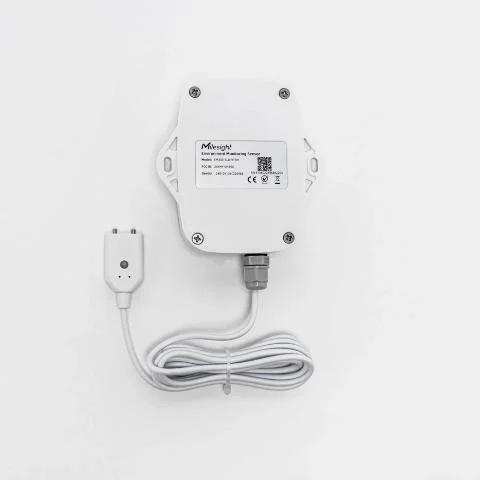
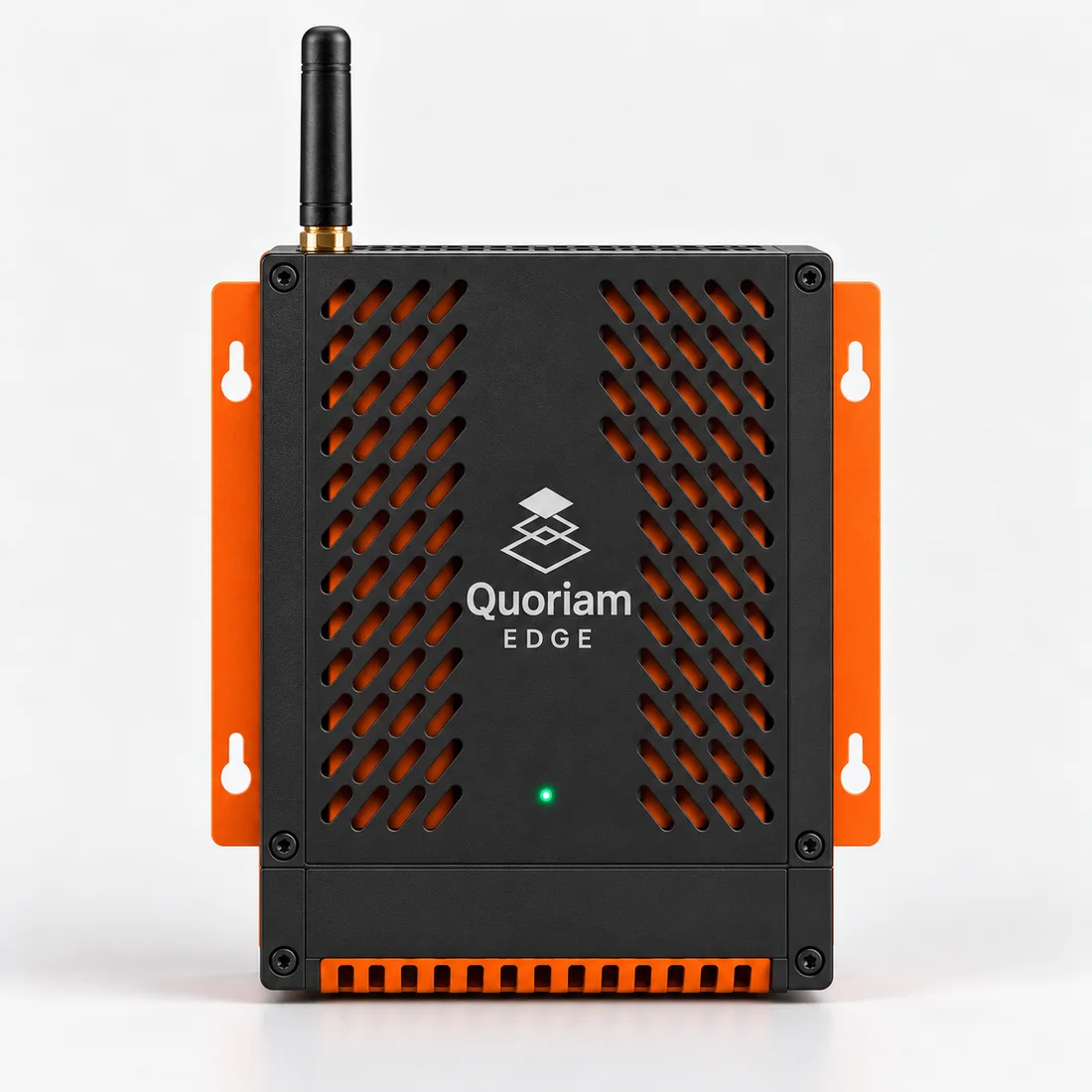
- GatewaysQuoriam Edge QE35, over 4G, fibre or LoRaWAN
- Reads from
- RTUs, PLCs and SCADA over Modbus TCP and OPC UA, read-only
- Work orders to
- Quoriam's own work orders, or your CMMS
- Alerts by
- Quoriam app, SMS and email, with escalation if nobody acknowledges
Hardware agnostic. Makes we fit includeMilesightFootfallCamTeltonikaAdvantechWe can work with any maker and choose the device for each site. The platform reads them all.
What your team sees.
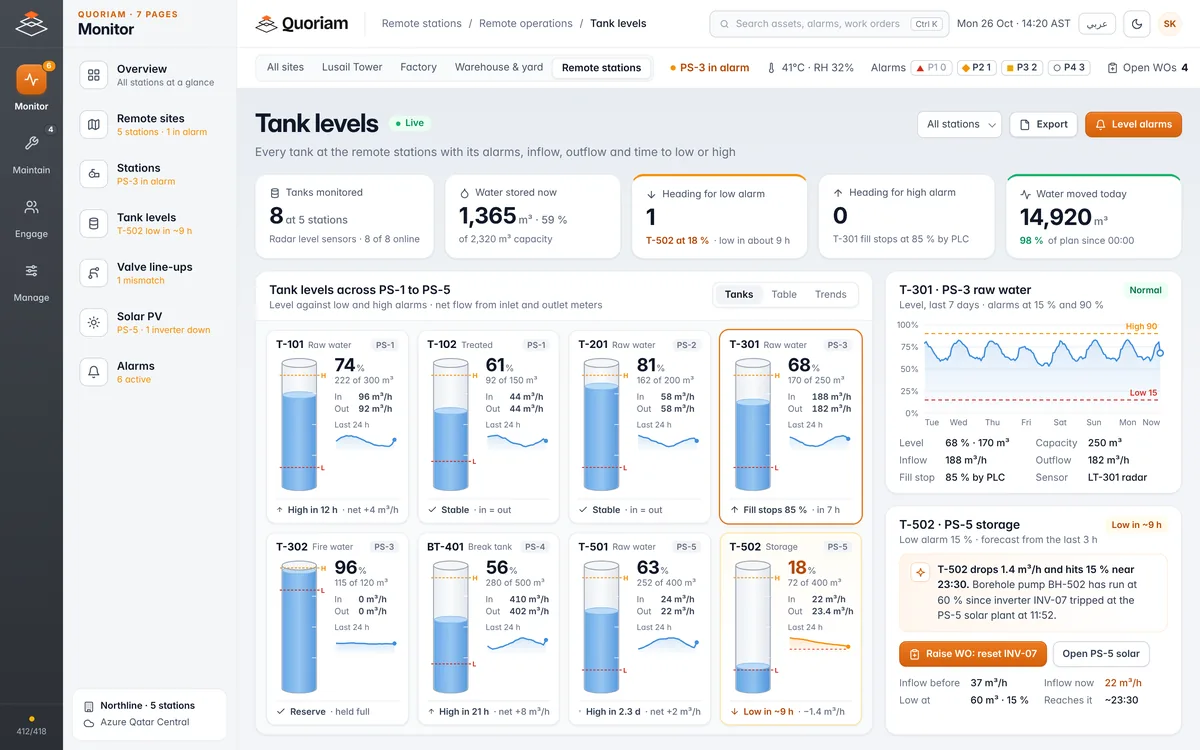
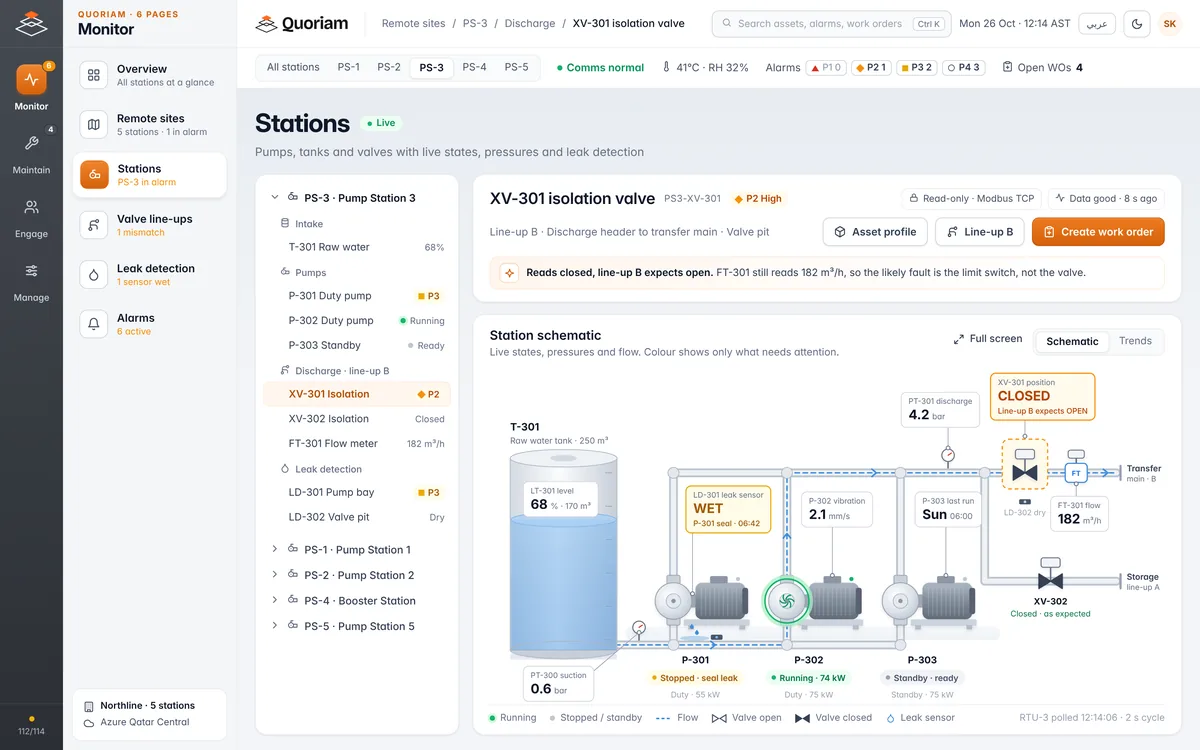
Each tank in context: its station, its alarms and the rule behind them.
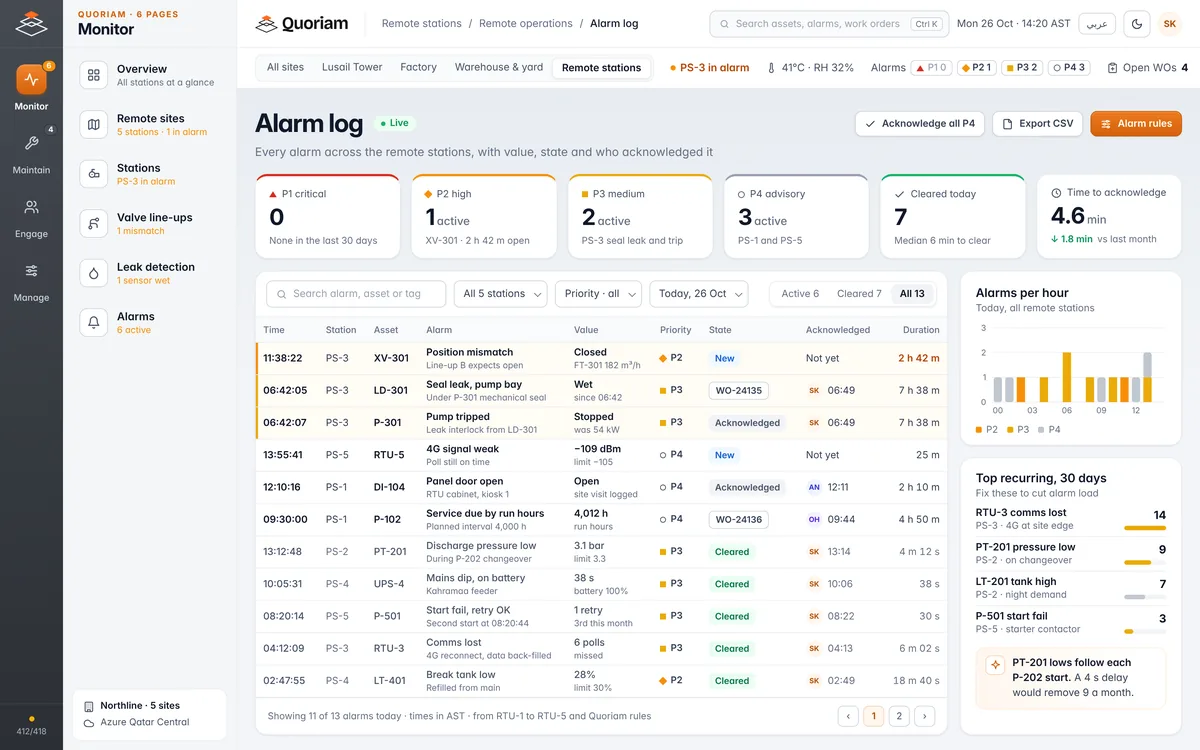
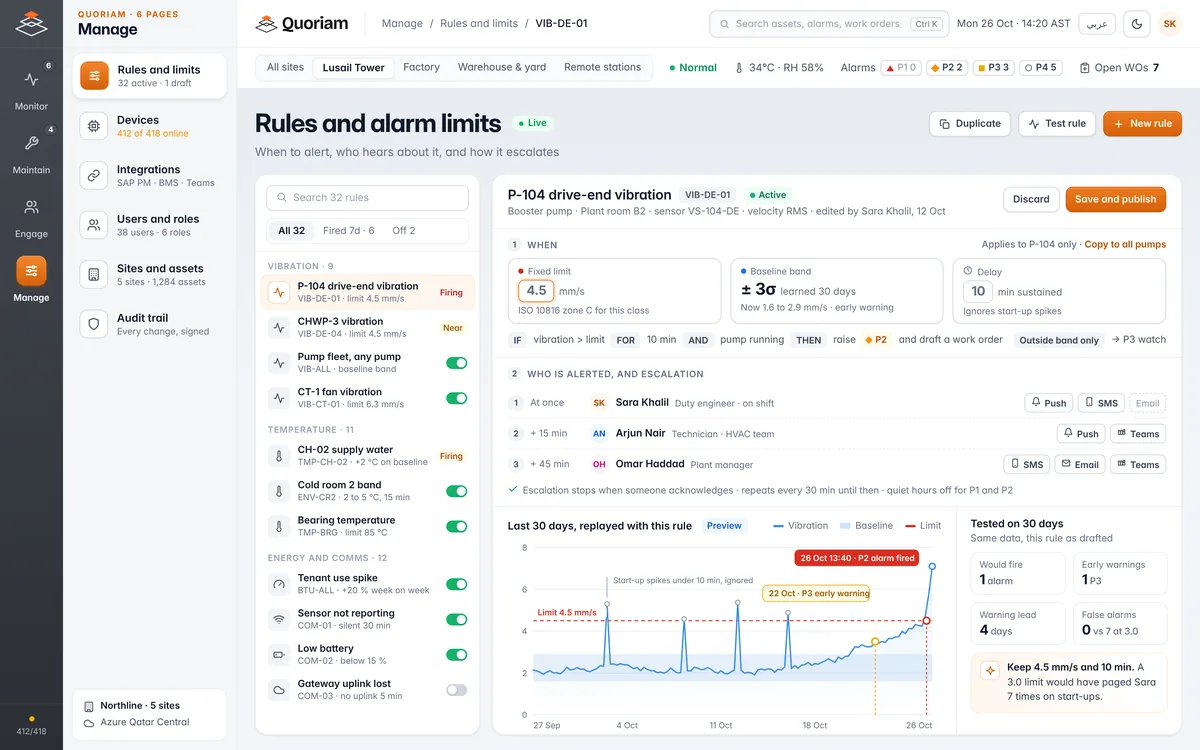
Or just ask.
Quoriam AI answers questions about your tanks in plain language and turns the answer into an action.
Where it's used in Qatar.
Wherever an empty or overflowing tank stops supply, power or production.
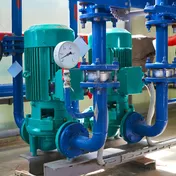
Water storage and pump stations
Raw water, treated water and break tanks at unmanned stations.
Utilities and district coolingDiesel for standby generators
Day and bulk tanks, watched for low fuel and unexplained draws.
Generator monitoringOil, gas and chemical sites
Chemical and condensate tanks, with certified sensors in hazardous areas.
ATEX and hazardous area monitoringFarms and irrigation
Irrigation reservoirs and fertigation tanks across large plots.
Agriculture and food
Questions buyers ask.
Something else? Ask us during the free assessment.
Is a radar or an ultrasonic level sensor better for my tank?
Radar suits most tanks, including diesel and chemicals, because vapour, dust and air temperature do not affect microwaves. Ultrasonic suits open or vented water tanks with a clear path to the surface. In narrow tanks and wells, a hydrostatic probe at the bottom often works best. We choose per tank on the site survey.
How many sensors do we need?
One level sensor per tank, unless the station's RTU or PLC already reads the level, in which case we connect to that. Add a leak sensor in each bund or pit that matters. One gateway usually covers a station. The free assessment gives you the count and price site by site.
Can it detect diesel theft or leaks?
Yes, by comparing the level with what should be happening. A fuel tank that drops while its generator is stopped, or a water tank that falls while the outlet meter reads zero, raises an alarm with the time and the volume lost. A leak sensor in the bund confirms where the liquid went.
Can it use the level readings our SCADA already has?
Yes. Quoriam reads existing level, flow and pump signals from RTUs, PLCs and SCADA over Modbus TCP or OPC UA, so a tank that is already measured needs no new sensor. Bare tanks get a sensor and a gateway, and both appear on the same screen.
Can Quoriam stop a pump or close a valve when a tank is full?
No. Filling and stopping stay with your PLC or RTU, as they do today; on the screen, T-301's fill stop at 85% is done by the PLC. Quoriam watches the level and alarms when the control does not act as expected.
What does it cost?
It depends on how many tanks you have, what each holds and what each station already measures. The free three-week assessment ends with a scope and a fixed price for your sites. A pilot on a few sites can come first.
Related.
Tank level monitoring is part of remote operations monitoring on the Quoriam platform.
- Remote operations monitoring
Valves, tanks, pumps and solar arrays across remote sites on one screen, with alarms on any change.
- Pump station monitoring
Run status, pressure, flow and power at unmanned pump stations.
- Water leak detection
Leak sensors and night-flow checks that catch a burst before the flood or the bill.
- Generator monitoring
Run hours, fuel, battery and alarms on standby gensets, so they start when needed.
Know which tank runs low next.
A free three-week assessment. We review your tanks and what each station already measures, then recommend where level sensors will save the most site visits.
We take on two assessments a month.Quoriam is designed to pay back within six months. How we calculate payback