




- Home
- Solutions
- Remote operations monitoring
- Pump station monitoring
Pump Station Monitoring in Qatar
Run state, pressure, flow and power for every pump at your unmanned stations, with an alarm the moment one trips, fails to start or stops delivering.
Last updated
What is pump station monitoring?
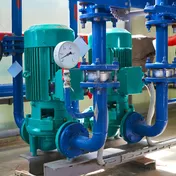
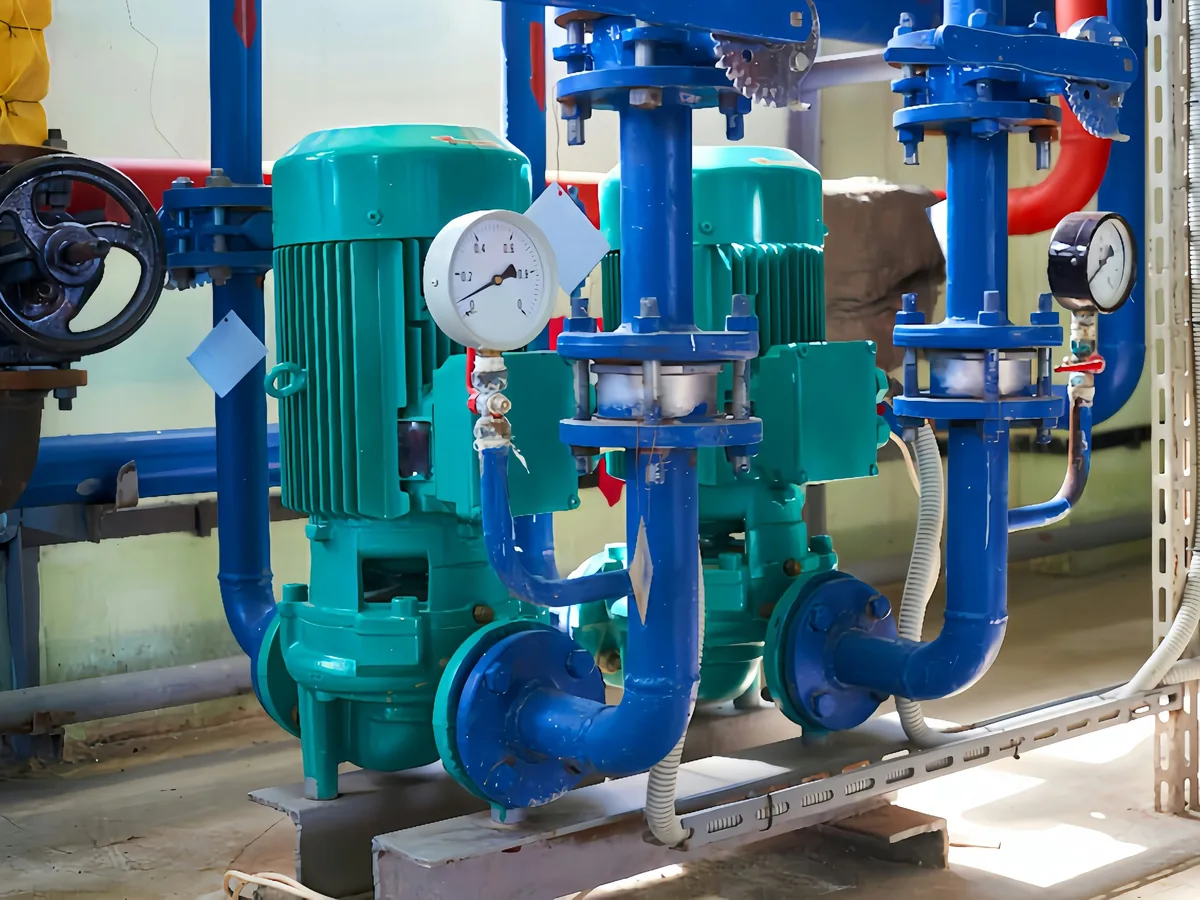
Pump station monitoring reads the state of every pump at an unmanned lift, booster or transfer station: running or tripped, suction and discharge pressure, flow, power and wet-well or tank level. It alarms when a pump trips, fails to start or runs against a closed valve, and shows the trends that point to wear.
The station's PLC or RTU already runs the pumps: lead and lag, level set points, interlocks. Pump station monitoring reads those signals, adds sensors where a station has none, and puts every station on one screen with an alarm history and work orders. It is the core of remote operations monitoring for water and utility networks.
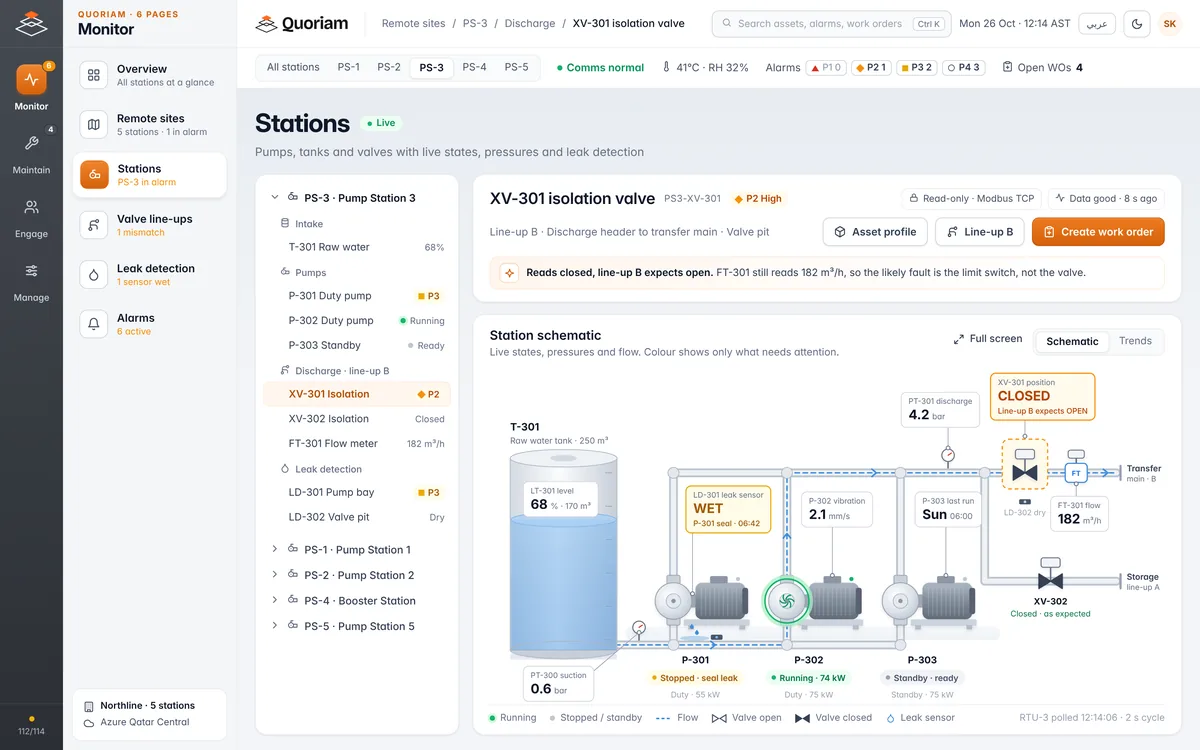
Power and flow together also give the energy per cubic metre pumped. On the PS-3 schematic, P-302 draws 74 kW at 182 m³/h, about 0.41 kWh/m³. That number creeping up at the same duty is an early sign the pump is wearing.
What it catches.
Events that would otherwise wait for the next site round.
| Event | What the readings show | When you hear about it |
|---|---|---|
| Pump trip | Run state drops and power falls to zero | At once, with the interlock that caused it, such as a leak sensor |
| Failed start | No run feedback after a start, or success only on retry | On the first failure, and when it recurs |
| Running against a closed valve | Power drawn and discharge pressure high, with flow near zero | Within minutes, before the pump overheats |
| Low discharge pressure | Pressure below its limit, often during a duty changeover | When it crosses the limit, with the pump that was running |
| Short cycling | More starts per hour than the motor is rated for | The same day, before the windings overheat |
| Station power and comms | Mains dip with the station on UPS, or the RTU stops reporting | As it happens, and again when it clears |
Starts per hour and cycle time.
Every start heats the motor. These are the figures a lift station is designed around.
| Design point | Typical figure | What to watch |
|---|---|---|
| Starts per hour | 6 to 10 for standard wastewater pump motors; often 4 to 6 above 50 hp | Starts per pump in each hour |
| Minimum run per cycle | 2 to 5 minutes | Run time of each cycle |
| Shortest cycle | T = 4V/Q, when inflow is half the pump's capacity | Cycle time against the design value |
V is the usable wet-well volume between pump start and stop levels, Q the pump's capacity. Your pump maker's limit takes precedence. Source: Open Exam Prep, lift station design. On wear, a Pumps & Systems example shows worn wear rings cutting flow from 4,100 to 3,900 gpm while power rose from 270 to 285 hp.
How it works.
Connect
Read the station's RTU or PLC over a read-only link. At a station with nothing, fit pressure transmitters, take run and trip signals from the starters and add a gateway over 4G or fibre.
Model the station
Enter each pump's duty or standby role, rated power and flow, pressure limits and start limit.
Alert and act
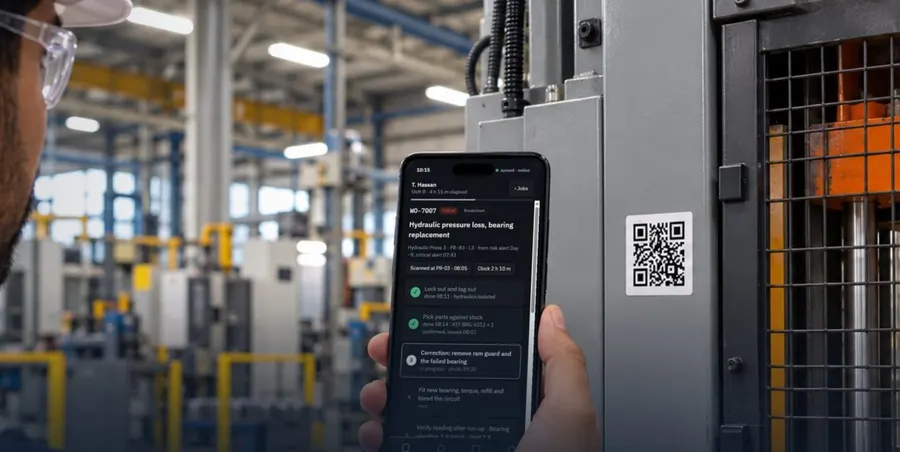
The duty engineer gets the alarm with the pressures, flow and pump states at that moment, and acknowledges it or raises a work order.

System view
For IT, OT and security reviewers: where the data goes, and how.
- At the pumpsRun and trip signals, suction and discharge pressure, flow, power, leak sensors
- At the stationExisting RTU or PLC, or a Quoriam Edge gateway over 4G or fibre
- NetworkCellular, fibre or site LAN, encrypted and kept apart from the control network
- Quoriam platformOn your premises or cloud hosted in Qatar
- Your team and systemsApp, SMS and email alarms; work orders to Quoriam or your CMMS
What your team sees.
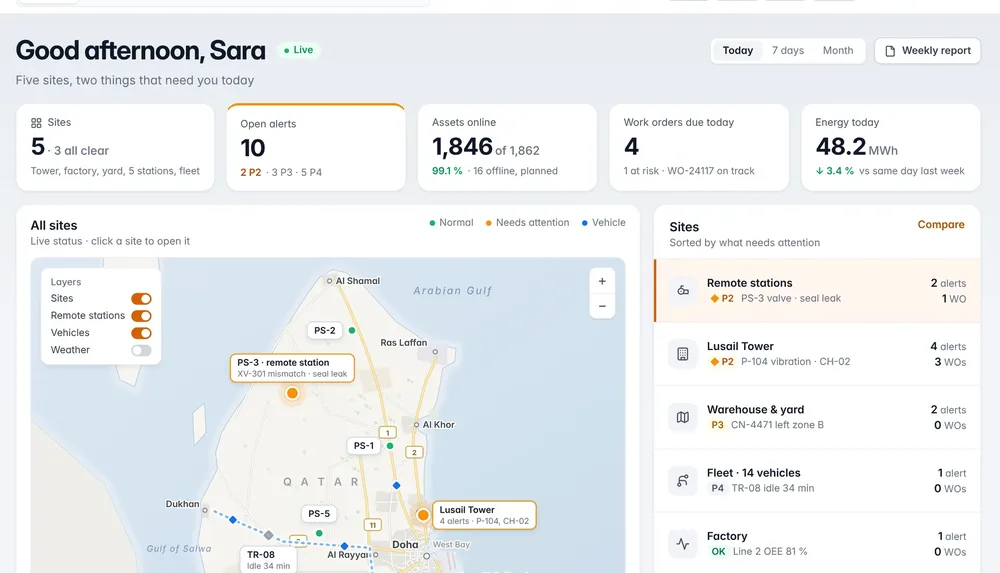
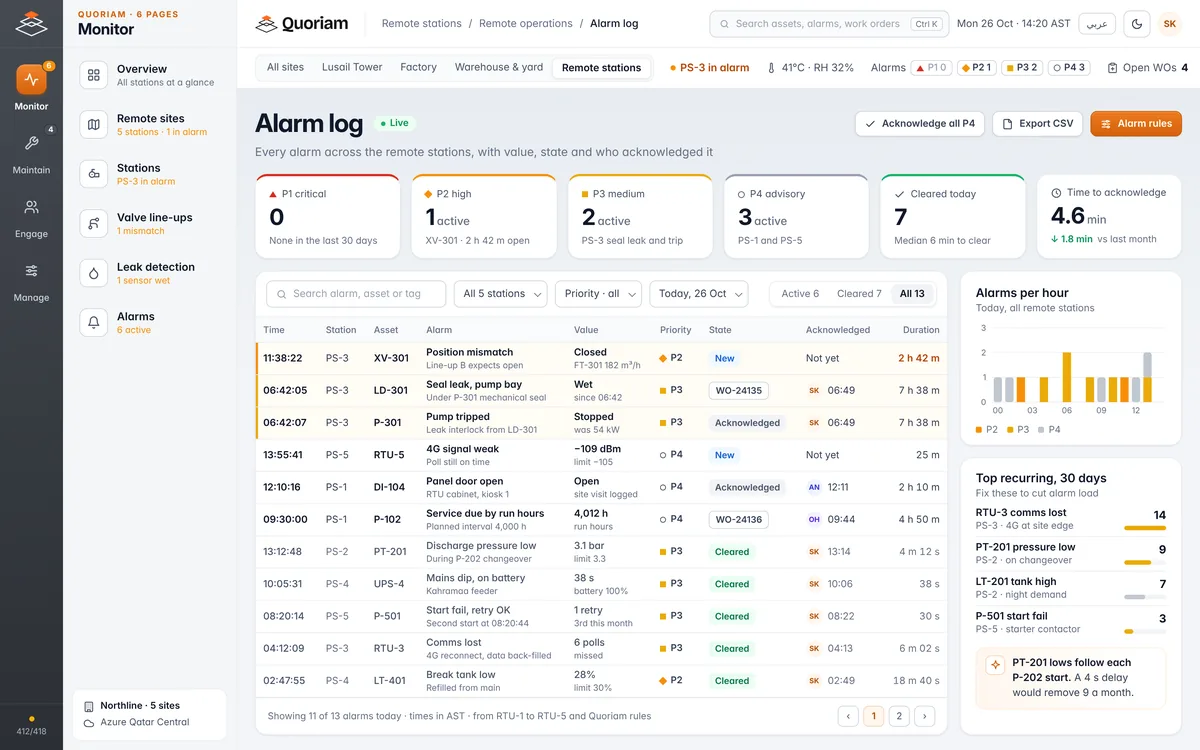
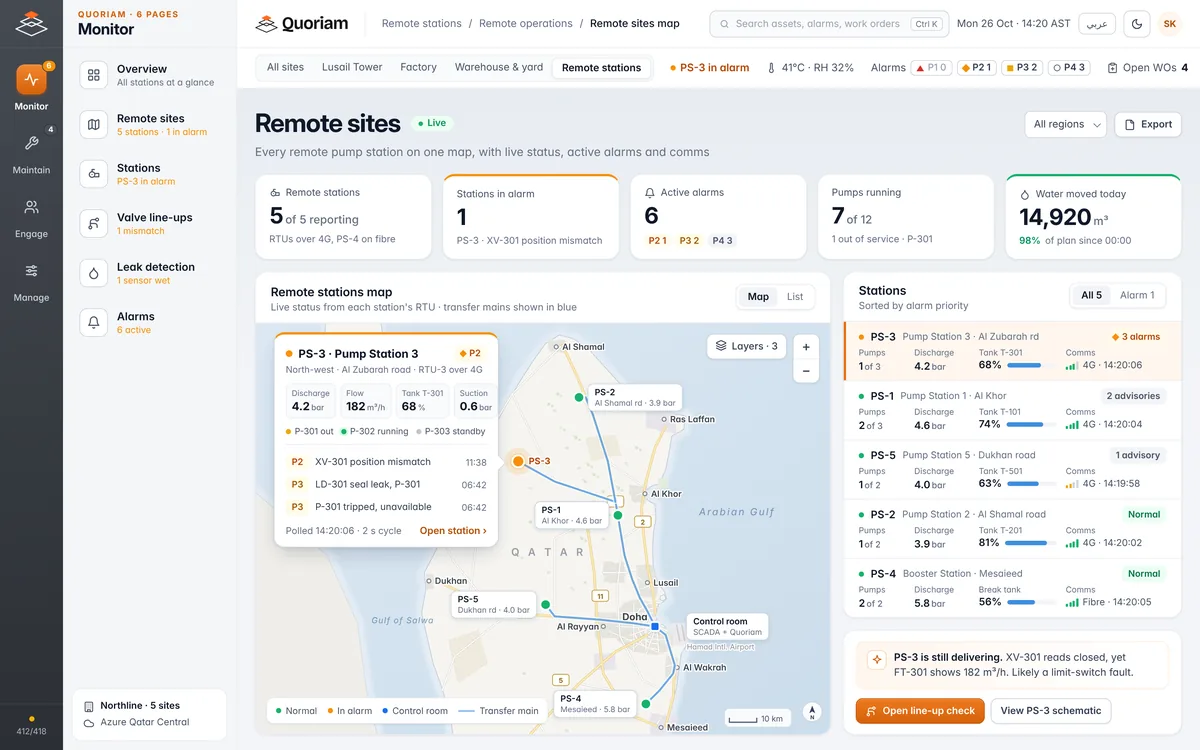
Every pump's state, live, and the history behind each alarm.
Or just ask.
Quoriam AI answers questions about your stations in plain language and turns the answer into an action.
Where it's used in Qatar.
Any station that is visited on a round and expected to run between visits.
Water transfer and booster stations
Stations along transfer mains, where one trip can starve a district.
Utilities and district coolingSewage and stormwater lift stations
Wet-well pumps where short cycling and high levels need catching early.
Tank level monitoringBuilding booster sets
Domestic water and chilled water pumps in towers and compounds.
Facilities and smart buildingsOil, gas and energy
Utility and transfer pumps spread across large process sites.
Oil, gas and energy
Questions buyers ask.
Something else? Ask us during the free assessment.
What should a pump station monitoring system measure?
At minimum, each pump's run and trip state, suction and discharge pressure, station flow and the wet-well or tank level. Add pump power for energy per cubic metre and early wear, then the station itself: mains supply, UPS, panel doors, leak sensors and the RTU link. Most stations on SCADA already have most of this.
How many sensors do we need?
It depends on what the station already measures. A station on SCADA may need nothing new. A bare station typically needs suction and discharge pressure per pump set, run and trip signals from each starter, a level sensor and one gateway. The free assessment counts it station by station.
Can it read our existing SCADA, RTUs or PLCs?
Yes. Quoriam reads RTUs, PLCs and SCADA over Modbus TCP or OPC UA, so a station that is already instrumented connects without new sensors and the control system stays as it is. Stations with nothing get sensors and a Quoriam Edge gateway over 4G or fibre, and both kinds sit on the same map with one alarm list.
Can Quoriam start or stop the pumps?
No. Starting, stopping and duty changeover stay with your PLC or RTU, exactly as today. Quoriam reads the station, alarms when a pump does something unexpected, such as failing to start after the PLC called it, and records who acknowledged the alarm and what they did.
Does it also tell us when a pump is wearing out?
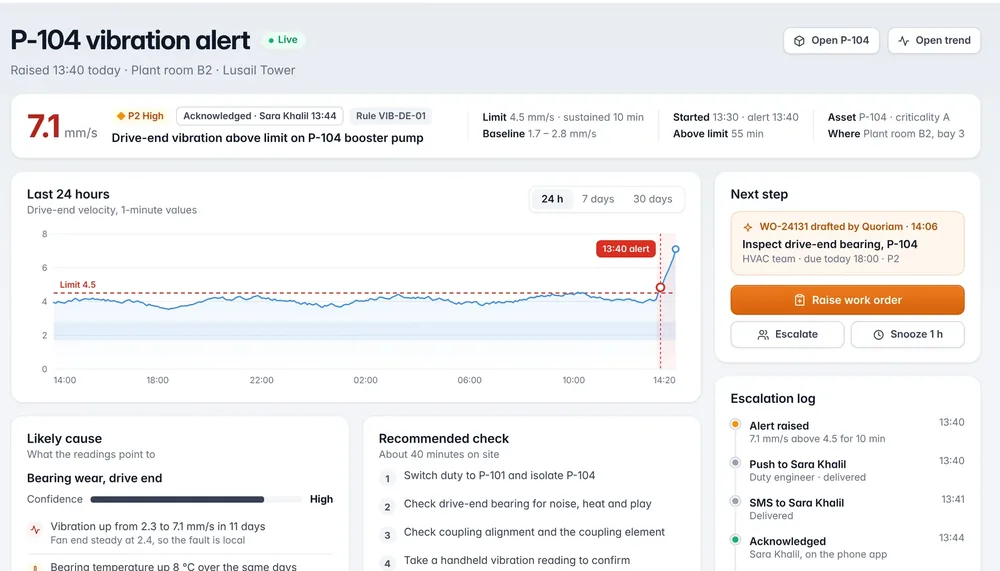
Partly. Rising energy per cubic metre, longer run times for the same volume and more failed starts all point to wear. For bearing and seal faults, add vibration and temperature sensors through pump and motor monitoring, on the same platform.
What does it cost?
It depends on the number of stations, what each already measures and how it connects. The free three-week assessment ends with a scope and a fixed price for your stations. You can then prove it on a pilot of a few stations before committing to the whole network.
Related.
Pump station monitoring is part of remote operations monitoring on the Quoriam platform.
- Remote operations monitoring
Valves, tanks, pumps and solar arrays across remote sites on one screen, with alarms on any change.
- Tank level monitoring
Water, diesel and chemical tank levels read remotely, with low-level and leak alarms.
- Valve position monitoring
Open, closed or in between, for every critical valve, without a site round.
- Pump and motor monitoring
Vibration, temperature and current on the pumps that keep water and cooling moving.
See every pump without the drive.
A free three-week assessment. We review your stations and what each already measures, then recommend where monitoring will save the most site visits.
We take on two assessments a month.Quoriam is designed to pay back within six months. How we calculate payback