




- Home
- Solutions
- Occupancy and people counting
- Smart restroom
Smart Washroom System in Qatar
Door counters, odour sensors, dispenser levels and feedback buttons in your washrooms, so cleaners go where the visits are, before the complaints start.
Last updated
What is a smart washroom system?
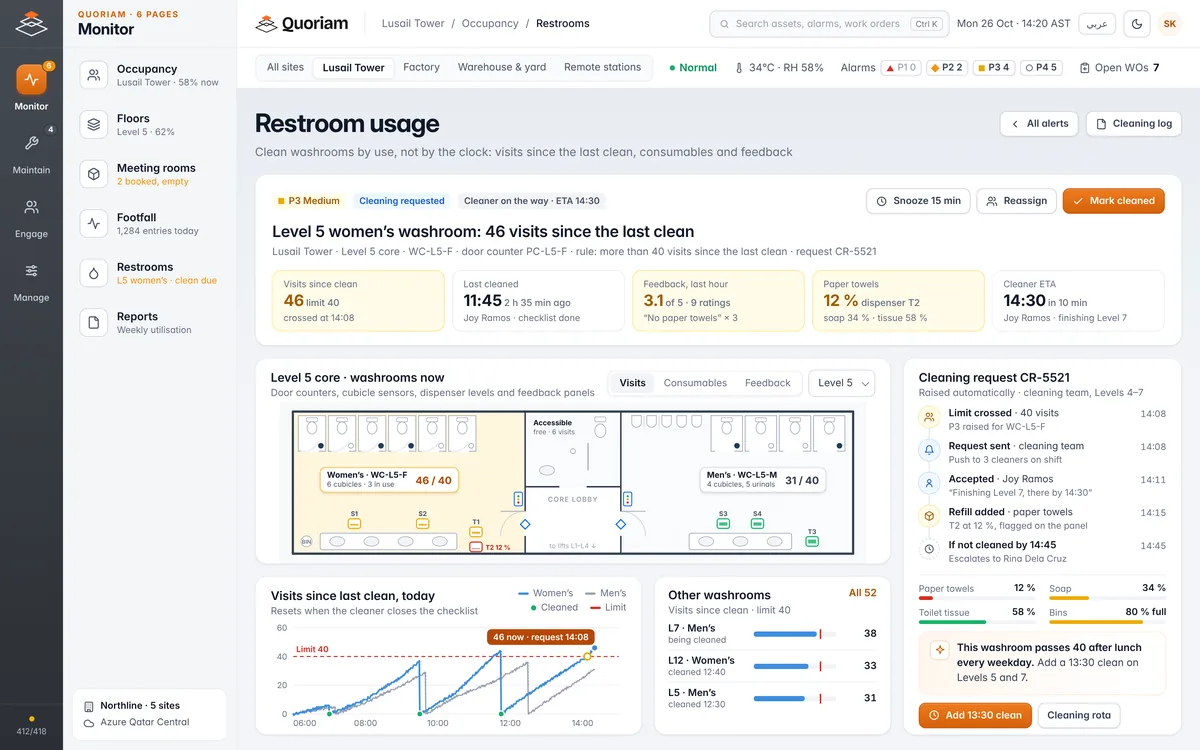
A smart washroom system counts visits to each washroom and watches odour, soap, paper and bin levels with small wireless sensors. When a washroom passes its visit limit, smells or runs low, it sends a cleaning request to the cleaners on shift and logs the clean, so busy washrooms are cleaned on use.
Also called a smart restroom, it replaces the sign-off sheet on the back of the door. In a mall or an airport, visits come in waves: after lunch, after a flight lands, at the end of a film. The counts show those waves, and the cleaning follows them.
It runs on the same platform as your people counting, so washroom visits sit next to footfall at the entrances and occupancy on each floor.
Fixed rota
Every washroom cleaned on the clock, busy or quiet.
Complaint calls
A visitor tells reception. By then they have left unhappy.
Cleaning on use
Visits, odour and dispenser levels raise the request, and the log shows every clean.
What each sensor watches, and what it triggers.
Most washrooms need only the first two. Add the rest where consumables or complaints are the problem.
| Sensor | What it reads | What it triggers |
|---|---|---|
| Door counter | People entering each washroom | A cleaning request once visits since the last clean pass your limit, such as 40 |
| Odour sensor | Ammonia (NH3) and hydrogen sulphide (H2S), with temperature and humidity | A request when the air goes stale, even if the visit count is still low |
| Cubicle sensors | Each cubicle in use or free | The most-used cubicles, for the deep clean and repairs |
| Dispenser levels | Paper towel, soap and toilet tissue left | A refill before the dispenser runs empty |
| Bin fill level | How full each bin is | Emptying before it overflows onto the floor |
| Feedback panel | Visitor ratings and the reason, such as no paper towels | A check when ratings drop, with the reason attached |
Washroom odour, by the numbers.
Two gases cause most washroom odour, and people notice both at a few parts per million or less, so the sensor must read at that level.
| Gas | Main source | When people notice it | Typical sensor range |
|---|---|---|---|
| AmmoniaNH3 | Urine, mostly around urinals | Some people at 5 ppm; 17 ppm on average | 0 to 10 ppm |
| Hydrogen sulphideH2S | Faeces, sewer pipes and dry drain traps | 0.01 to 1.5 ppm; offensive at 3 to 5 ppm | 0 to 5 ppm |
Sources: ammonia odour threshold, NOAA chemical hazards training; hydrogen sulphide odour levels, OSHA; sources of each gas, European Cleaning Journal and Milesight; sensor ranges from the Milesight GS301 washroom odour sensor datasheet, as an example. Quoriam is hardware agnostic, so the sensor we fit is chosen for each washroom during the survey.
How it works.
Survey
We walk each washroom with your facilities team and set a visit limit for each one from your current rota and footfall.
Fit
Counters go over the doors, odour sensors near urinals and drains, level sensors inside dispensers. Most are wireless and battery powered.
Send
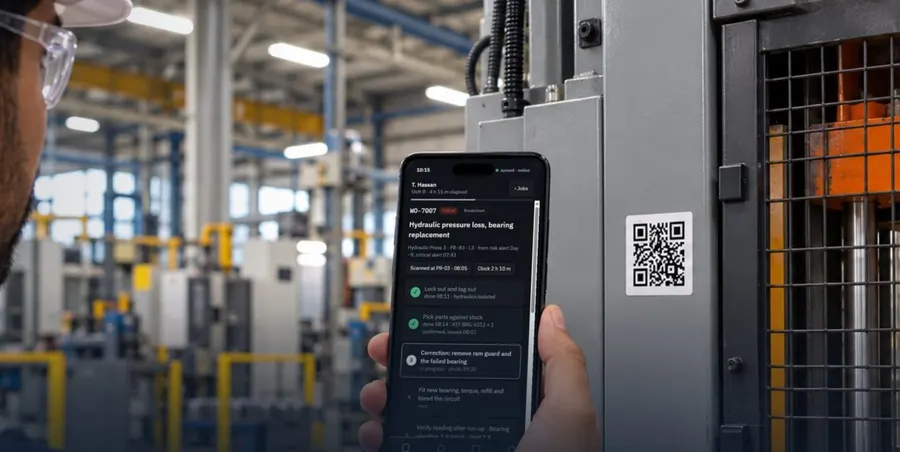
A washroom past its limit sends a request to the cleaners on shift. One accepts it; if it isn't cleaned by the deadline, the supervisor is told.
Close and learn
The cleaner marks it cleaned and the count resets. The weekly pattern shows where the rota needs an extra clean.
System view
For IT, OT and security reviewers: where the data goes, and how.
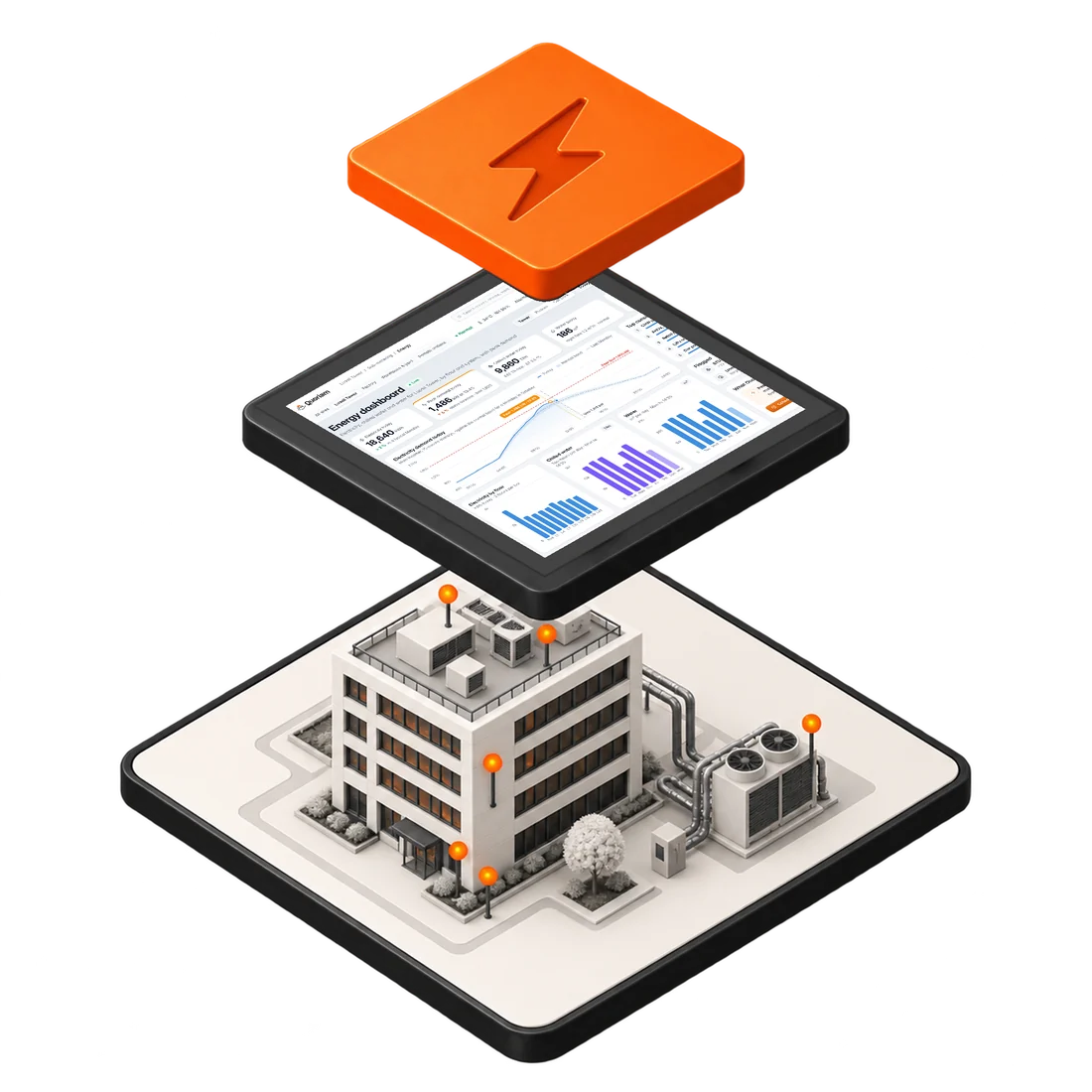
- In the washroomDoor counters, odour, cubicle, dispenser and bin sensors, and a feedback panel
- On each floorLoRaWAN gateway for the wireless sensors
- NetworkSite LAN or cellular, encrypted and kept apart from the control network
- Quoriam platformOn your premises or cloud hosted in Qatar
- Your team and systemsRequests pushed to cleaners, escalation to supervisors, a cleaning log and weekly reports
What your team sees.
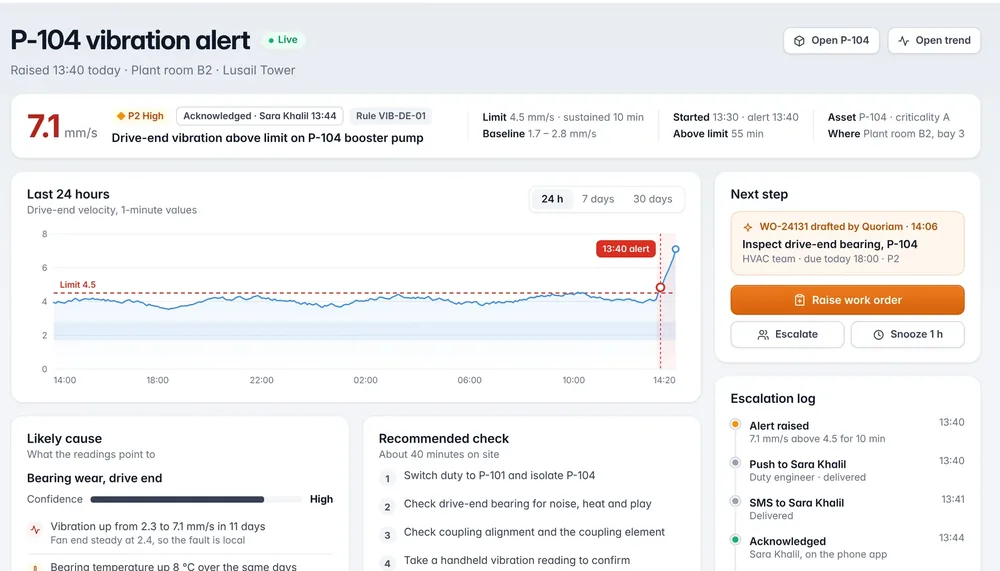
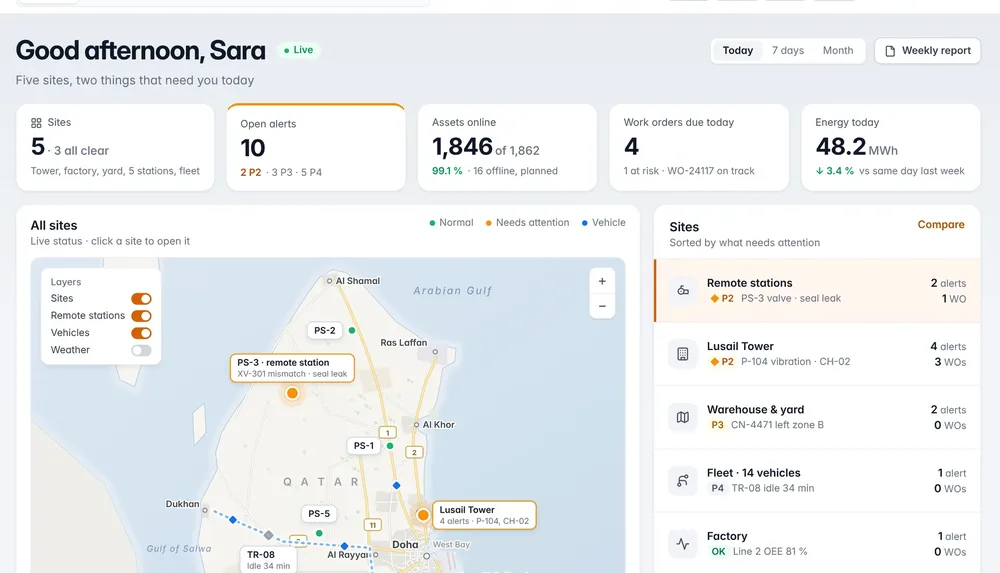
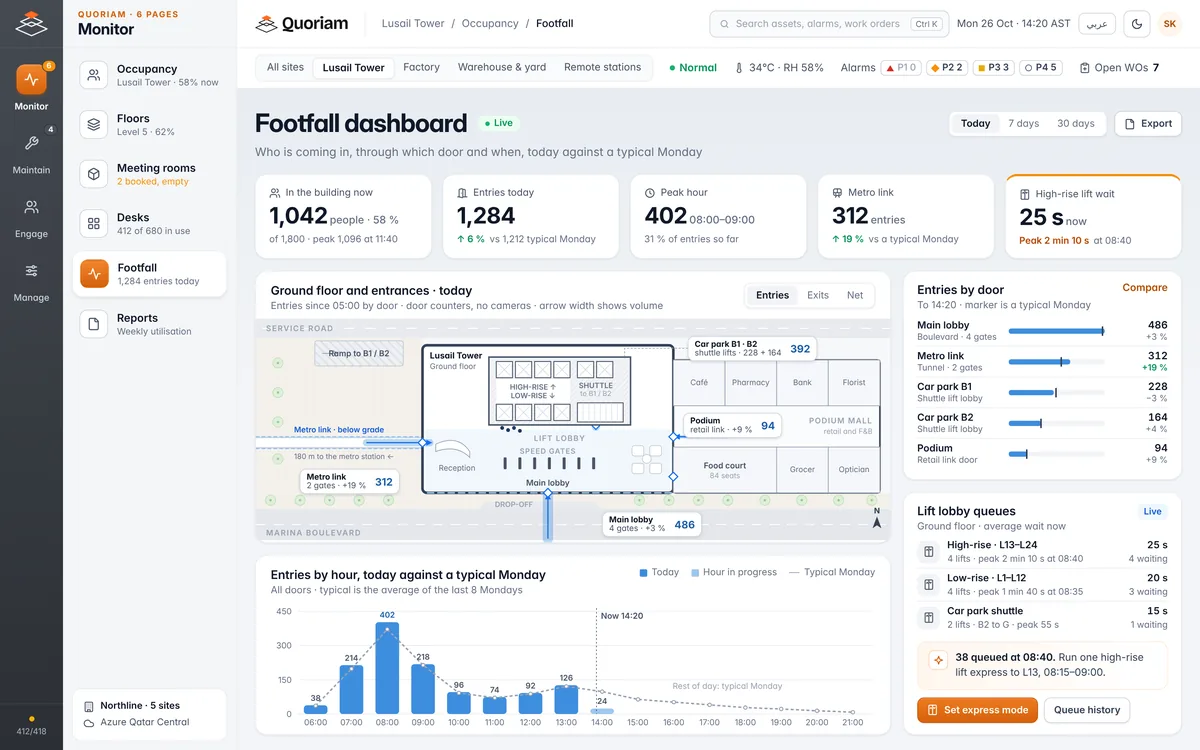
Which washroom needs a clean, and who is on the way.
Or just ask.
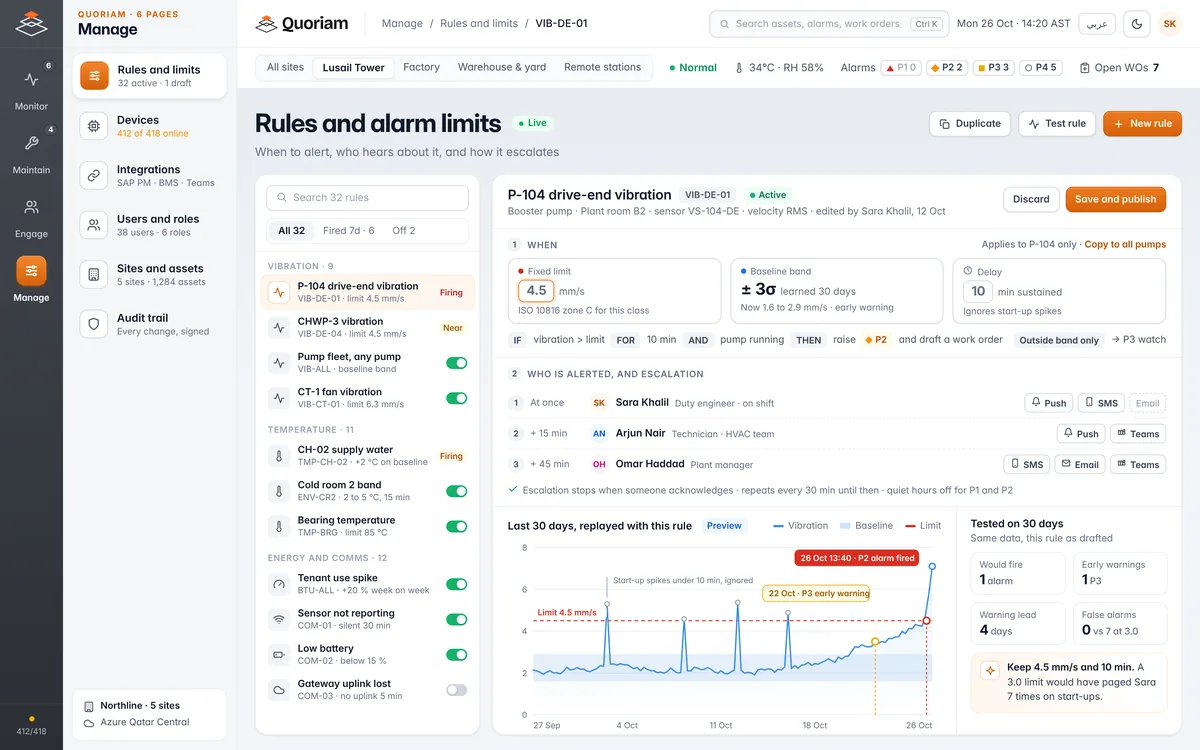
Quoriam AI answers in plain language and turns the answer into an action.
Where it's used in Qatar.
Anywhere visits come in waves.
Malls and food courts
Washrooms by the food court, cinema and prayer rooms, busiest at meal times.
Airports and transport hubs
Gate and arrivals washrooms that fill when a flight lands.
Office towers
Core washrooms on every floor of Lusail and West Bay towers.
Facilities and smart buildingsHospitals and clinics
Outpatient and visitor washrooms, where patients judge the hospital by what they find.
Healthcare
Questions buyers ask.
Something else? Ask us during the free assessment.
How does a smart washroom system work?
Sensors count visits at each washroom door and watch odour, dispenser and bin levels. When a washroom crosses a limit you set, a cleaning request goes to the cleaners on shift. The cleaner marks it done and the count resets. The log keeps every request and clean.
How many sensors does each washroom need?
One counter per washroom door, which is usually enough to start. Add an odour sensor where there are urinals or complaints, and level sensors on the dispensers that run out most. One gateway usually covers a floor or a cluster of washrooms. The free assessment gives you the count.
What visit limit should trigger a clean?
Start from your current rota. If a washroom is cleaned every two hours and sees about 40 visits in that time at its busiest, 40 is a sensible first limit. After a few weeks the counts and feedback ratings show whether to raise or lower it.
Do the sensors identify anyone?
No. Door counters count people crossing the doorway, and cubicle sensors only know whether a cubicle is in use. Quoriam receives counts, levels and ratings, nothing that could name a visitor. We do not fit cameras in washrooms, and the sensor types are agreed with you before install.
Do odour sensors work in Qatar's heat?
Inside an air-conditioned building, yes. Sensor makers specify accuracy over a temperature band: the Milesight GS301, for example, keeps ±5% accuracy from −40 to 35 °C. Unconditioned outdoor toilet blocks in a Doha summer go past that, so we check the location first.
Can requests go to our cleaning contractor or CAFM system?
Requests go to cleaners through the Quoriam app, with escalation to the supervisor if a washroom isn't cleaned in time, and every clean is logged against the request. Sending requests to a cleaning contractor's own app or to your CAFM system instead depends on what that system accepts.
What does it cost, and can we pilot it?
It depends on how many washrooms you cover and which sensors each one needs. Most sites start with the busiest washrooms on one floor or one wing as a pilot. The free three-week assessment ends with a sensor plan and a fixed price.
Related.
Smart washrooms are part of occupancy and people counting on the Quoriam platform.
- Occupancy and people counting
See how floors, rooms and desks are really used, then cool and clean to match.
- Desk and room occupancy
Which desks and meeting rooms are really used, and when.
- Indoor air quality
CO2, particles and VOCs by floor and room, against the limits your building targets.
- Smart waste bins
Fill-level sensors that send trucks only to bins that need emptying.
Clean where the visits are.
A free three-week assessment. We walk your washrooms, review the rota and any counts you already have, and deliver a sensor plan with the visit limits to start from.
We take on two assessments a month.Quoriam is designed to pay back within six months. How we calculate payback