







- Home
- Solutions
- Asset tracking and geofencing
- Smart waste bins
Smart Waste Management in Qatar
Fill-level sensors in your bins, skips and compactors, so the truck goes only where the waste is, and the supervisor hears about a bin before it overflows.
Last updated
What is smart waste management?
Smart waste management fits an ultrasonic fill-level sensor under the lid of each bin, skip or compactor. The sensor measures the distance down to the waste, the platform turns it into a percentage, and collection goes only to the bins that are nearly full. Overflow risk, missed pickups and silent sensors raise an alert.
Most collection still runs to a timetable: every bin, every round, full or not. A fill-level sensor tells you which bins need the truck today. Quiet days get a shorter round, and busy bins are emptied before they spill.
Qatar's Ministry of Municipality works this way on public bins. It has fitted sensors to 7,000 waste containers, which report how full each one is and when it was last emptied, and its trucks collect only the containers that are full or overdue (The Peninsula, January 2024). In 2025 it piloted smart containers in Al Wakrah that send their data to the collection vehicles (The Peninsula, November 2025). Quoriam brings the same approach to the bins on your own sites.
What it tells you, and what happens next.
The events most sites set up first, what the sensor reads for each, and the action that follows.
| Event | What the sensor reads | What happens |
|---|---|---|
| Bin nearly full | Fill level above the threshold you set for that bin, often around 80% | Added to the next collection list, with its location |
| Filling faster than usual | Fill level climbing much faster than the bin's normal rate, after an event or a busy weekend | Alert to the supervisor to send a truck or swap the skip early |
| Missed collection | Fill level still high after the bin's scheduled pickup | Alert naming the bin and the round that should have emptied it |
| Bin emptied | A sharp drop in fill level | Logged as a collection, time-stamped, for the contractor's service record |
| Hot load or fire | Temperature inside the bin rising sharply | Urgent alert to the duty supervisor and the site's emergency contact |
| Sensor silent | No reading since its last scheduled report | Listed for a check, so a dead battery never looks like an empty bin |
How it works.
Survey and fit
We walk your sites with your facilities or waste team and list every bin, skip and compactor by size and use. Each one gets a sensor under the lid or on the hopper, pointing down at the waste.
Set the thresholds
Each bin gets its own full level and pickup rules. A food court bin might be due at 70%, a cardboard skip at 85%. Every sensor is set to report its distance to the waste on a fixed interval.
Collect by need
Each morning Quoriam lists the bins due for collection by site and area, and sends it to your team or your contractor.
Check the service
Every emptying shows up as a drop in fill level. A weekly report shows bins collected, bins missed and how full each one was at pickup, so you pay for collections that happened.
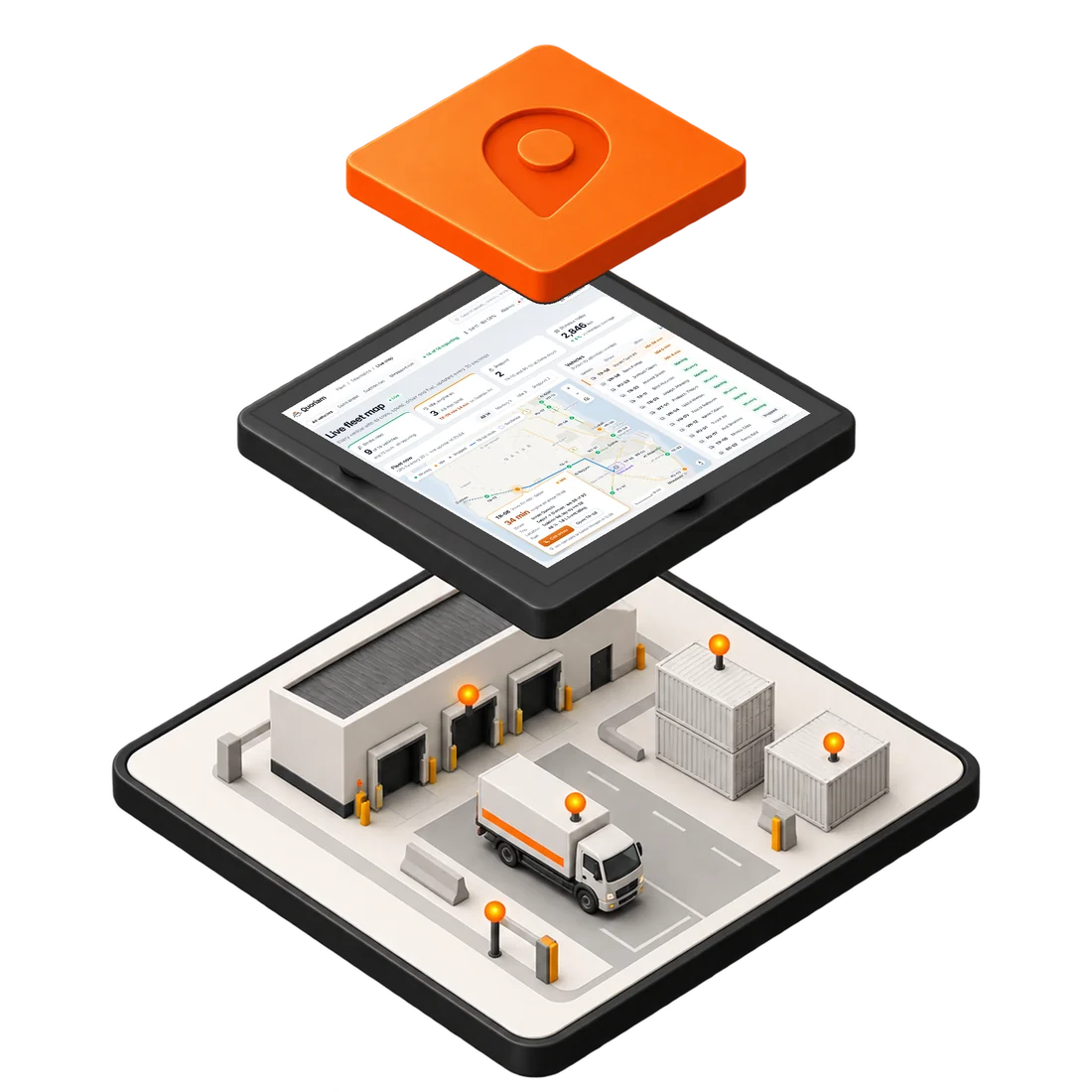
System view
For IT, OT and security reviewers: where the data goes, and how.
- In the binUltrasonic fill-level sensor under the lid or on the hopper, battery powered
- On siteLoRaWAN gateway where sensors use it; cellular sensors report direct
- NetworkCellular from the sensors, site LAN from the gateways, encrypted and kept apart from the control network
- Quoriam platformOn your premises or cloud hosted in Qatar
- Your team and contractorCollection lists, alerts by app, SMS and email, and a weekly service report
What your team sees.
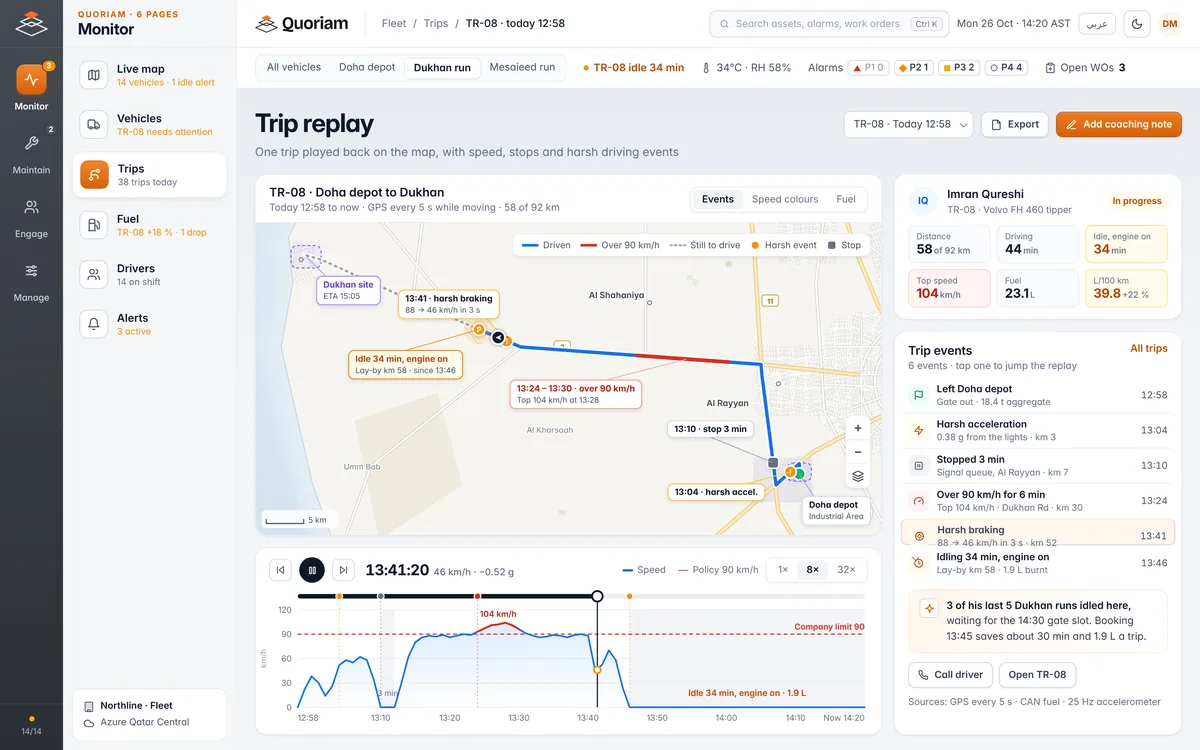
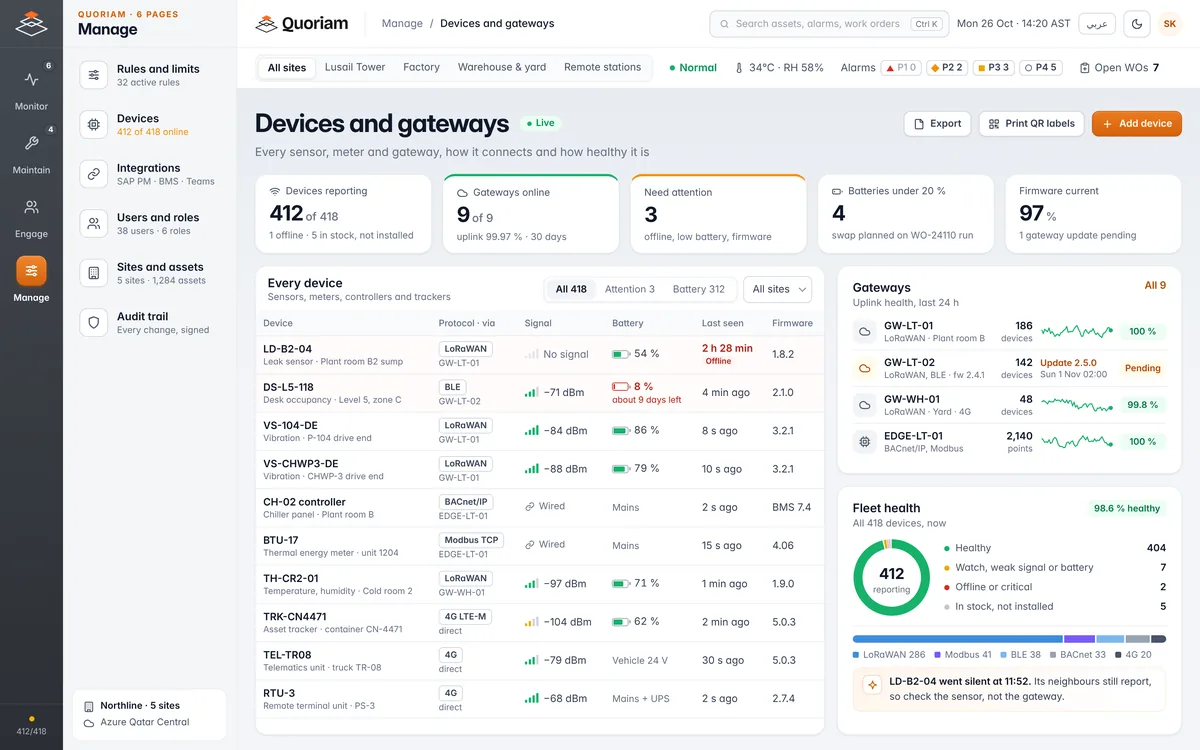
Bins, trucks and sensors on the same platform as the rest of your assets.
Where it's used in Qatar.
Anywhere bins fill at different rates.
Compounds and labour accommodation
Communal bins that fill fast after meal times and at weekends, spread across large residential sites.
Malls, hospitals and campuses
Back-of-house bins, compactors and washroom bins, serviced by cleaners and contractors on shifts.
Smart restroomIndustrial sites and yards
Skips for scrap, cardboard and general waste at plants, warehouses and laydown yards.
Logistics and warehousingWaste contractors
Collection rounds across many customers, with proof of every pickup for the monthly invoice.
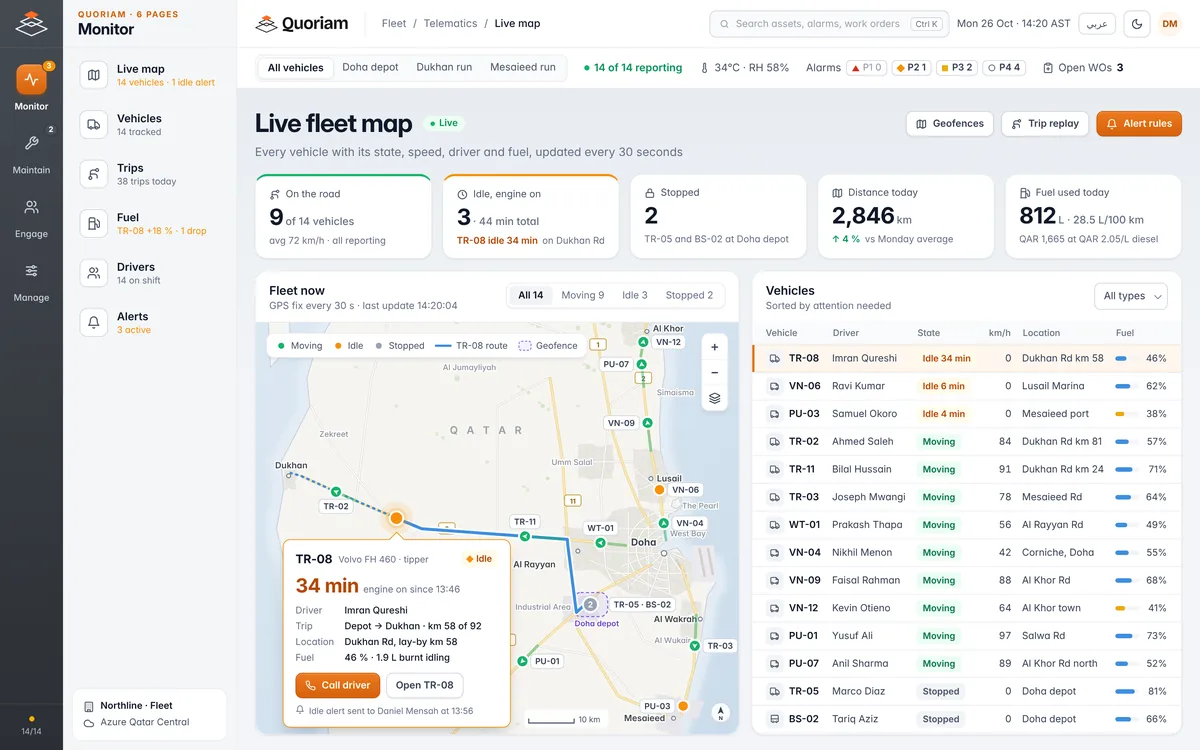
Fleet telematics
Questions buyers ask.
Something else? Ask us during the free assessment.
How does a smart bin sensor measure how full a bin is?
It sends an ultrasonic pulse down from under the lid and times the echo from the top of the waste. The shorter the time, the fuller the bin. Sound travels faster in hot air, so ultrasonic level sensors measure temperature and correct for it (Bürkert). Quoriam turns the distance into a percentage for that bin's depth.
How many sensors do we need?
One for each bin, skip or compactor you want collected by fill level. Most sites start with the bins that overflow or get collected half empty, often a few dozen, and leave low-use bins on the timetable. The free assessment counts them with you and prices the first phase.
What hardware do you fit?
A battery-powered ultrasonic fill-level sensor in each bin, fixed under the lid or on the hopper and pointing down at the waste. It reports over LoRaWAN through a site gateway or over cellular. Battery life depends on how often it reports, and Quoriam flags low batteries early.
Will the sensors cope with Qatar's summer?
Bins in the sun run far hotter than the air, and heat shortens battery life. We choose sensors rated for that heat, mount them out of direct sun where the bin allows, and set the reporting interval to match how fast each bin fills. Low batteries show up in Quoriam before they run out.
Can our waste contractor use it?
Yes. Your contractor can get the daily collection list and see which bins were emptied. Where their trucks already have trackers, Quoriam can read them and show the rounds on the same map. Collection data can also go to your ERP or facilities system.
Does it work on skips, compactors and underground containers?
Usually, yes. The sensor needs a clear view down to the waste, so we check the mounting point on each container type during the survey. Compactors and large skips may need a different sensor or bracket. A container that can't take a sensor stays on its timetable.
What does a pilot cost?
It depends on how many bins you include and how they connect. Most clients start with one site and its busiest bins, then add the rest once the collection list proves itself. The free three-week assessment ends with a scope and a fixed price.
Related.
Smart waste bins are part of asset tracking on the Quoriam platform.
- Asset tracking and geofencing
Know where equipment, tools and containers are, and get an alert the moment one leaves its zone.
- Fleet telematics
Track vehicles, fuel and driver behaviour, with servicing scheduled from the same data.
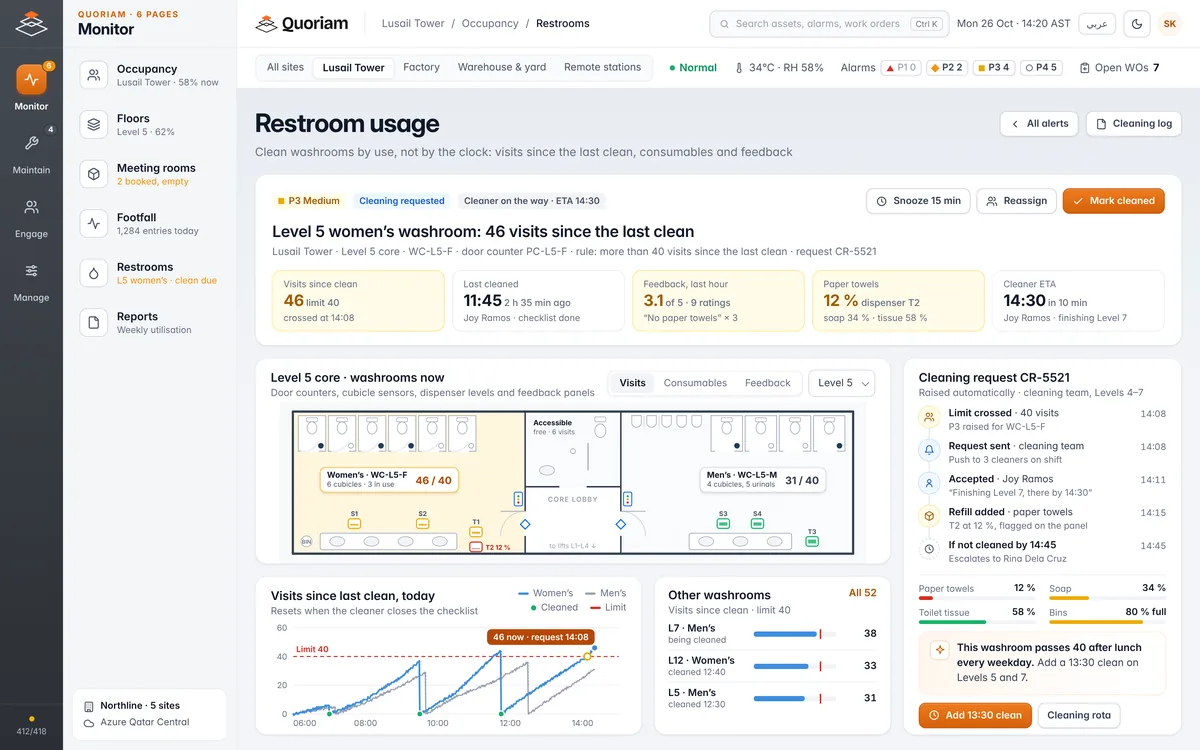
- Smart restroom
Usage counts and odour sensors that send cleaners when they're needed.
- Container tracking
GPS trackers on containers and trailers, with yard zones and dwell-time alerts.
Send the truck where the waste is.
A free three-week assessment. We map your bins, skips and collection rounds with your team, then recommend which bins to fit first and the thresholds to set.
We take on two assessments a month.Quoriam is designed to pay back within six months. How we calculate payback