




- Home
- Solutions
- Environmental monitoring
- Indoor air quality
Indoor Air Quality Monitoring in Qatar
Sensors in your offices, meeting rooms and classrooms that show where the air is stale or dusty, and what to change in the ventilation to fix it.
Last updated
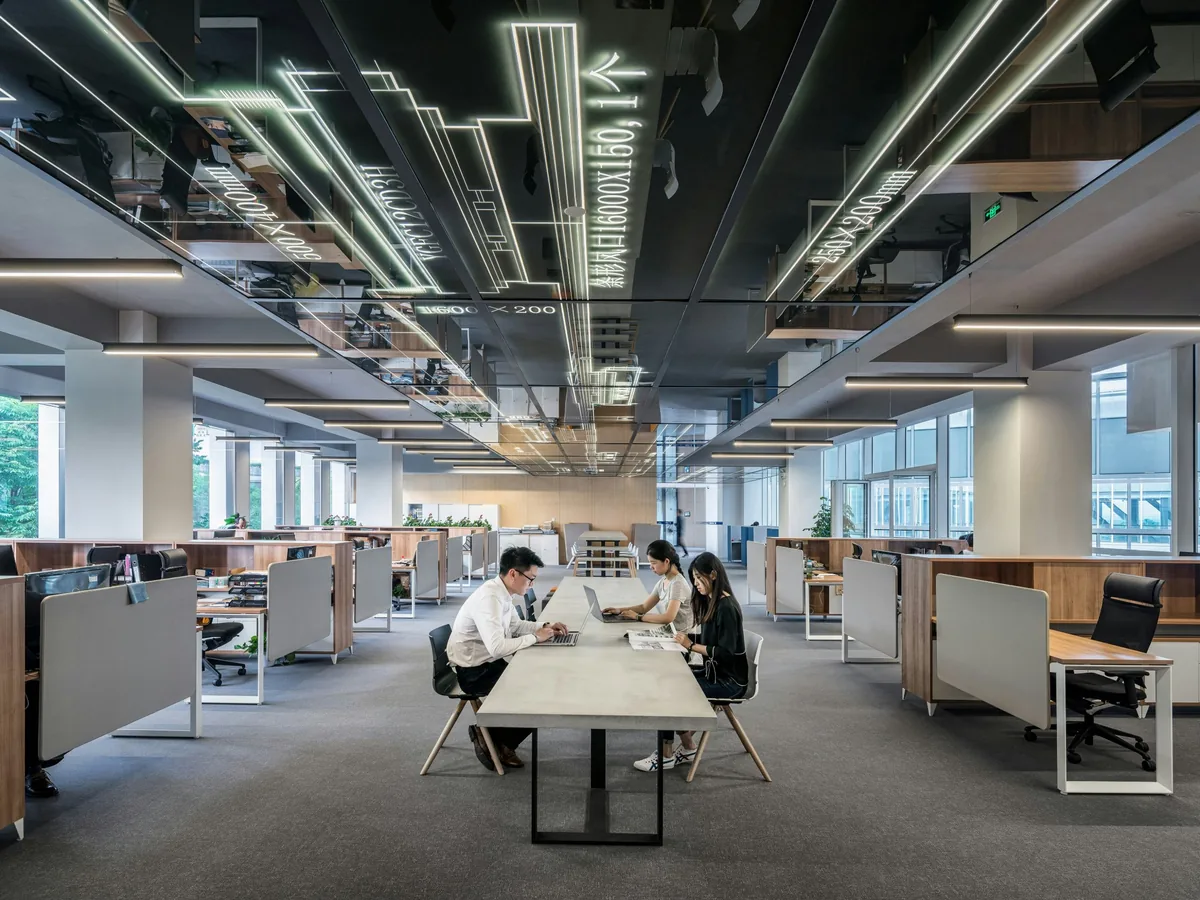
What is indoor air quality monitoring?
Indoor air quality monitoring measures CO2, fine particles (PM2.5), volatile organic compounds and humidity room by room and checks each reading against the limits your building targets. It shows which rooms are short of fresh air for the people in them, where outdoor dust is getting in, and when cleaning or a new fit-out is loading the air.
CO2 rises with the number of people in a room and falls with fresh air, so it shows where ventilation isn't keeping up, as long as you read it against the people count. It is one signal among several. Particles, gases and humidity each have their own causes and fixes, so a useful system measures all of them in the same place.
In Qatar, dust is the outdoor threat. A study in Doha homes and classrooms found outdoor PM2.5 above the WHO 24-hour guideline on every sampling day, while indoor levels depended mostly on cooking, cleaning and smoking, and on how tight the building was (Tutsak et al., 2024).
What each reading tells you.
Five measures, what each one means, and the usual cause when it climbs.
| Measure | What it tells you | Usual cause when it climbs |
|---|---|---|
| CO2 | Whether fresh air keeps up with the people in the room | A full meeting room, a closed fresh-air damper, or a VAV box already at maximum |
| PM2.5 | Fine particles getting past the filters and the building envelope | A dust event with a filter bypass or open doors; cooking or smoking inside |
| TVOC | Gases from cleaning products, paint, furniture and adhesives | Cleaning in occupied hours, or a new fit-out still releasing gases |
| Humidity | Whether outdoor moisture is being removed | Humid fresh air coming in untreated, or a cooling coil not dehumidifying |
| Temperature | Comfort, and whether a zone is over- or under-cooled | More people than the zone was designed for, or sun on the glazing |
Guideline values, and what they mean.
The figures most buildings set their targets from. Your own targets come first; we set each zone's limits with you.
| Measure | Guideline | Source |
|---|---|---|
| PM2.5 | 5 µg/m³ annual mean; 15 µg/m³ 24-hour mean | WHO 2021 |
| PM10 | 15 µg/m³ annual mean; 45 µg/m³ 24-hour mean | WHO 2021 |
| TVOC | Up to 0.3 mg/m³ hygienically safe; 1 to 3 mg/m³ noticeable; 3 to 10 mg/m³ cause for hygienic concern | German Environment Agency |
| CO2 | No legal limit. 1,000 ppm is a common benchmark; no current ASHRAE standard sets an indoor CO2 limit | NIST |
Sources: WHO global air quality guidelines (2021), annual values from WHO, 24-hour values as summarised by DieselNet; German Environment Agency TVOC levels; NIST, Quit blaming ASHRAE Standard 62.1 for 1000 ppm CO2. The WHO values are set for outdoor air; we use them as a reference for indoor targets unless your building sets its own.
How it works.
Fit
Air quality sensors in meeting rooms, classrooms and each open-plan zone, at breathing height and away from doors and supply diffusers. Readings every minute.
Connect
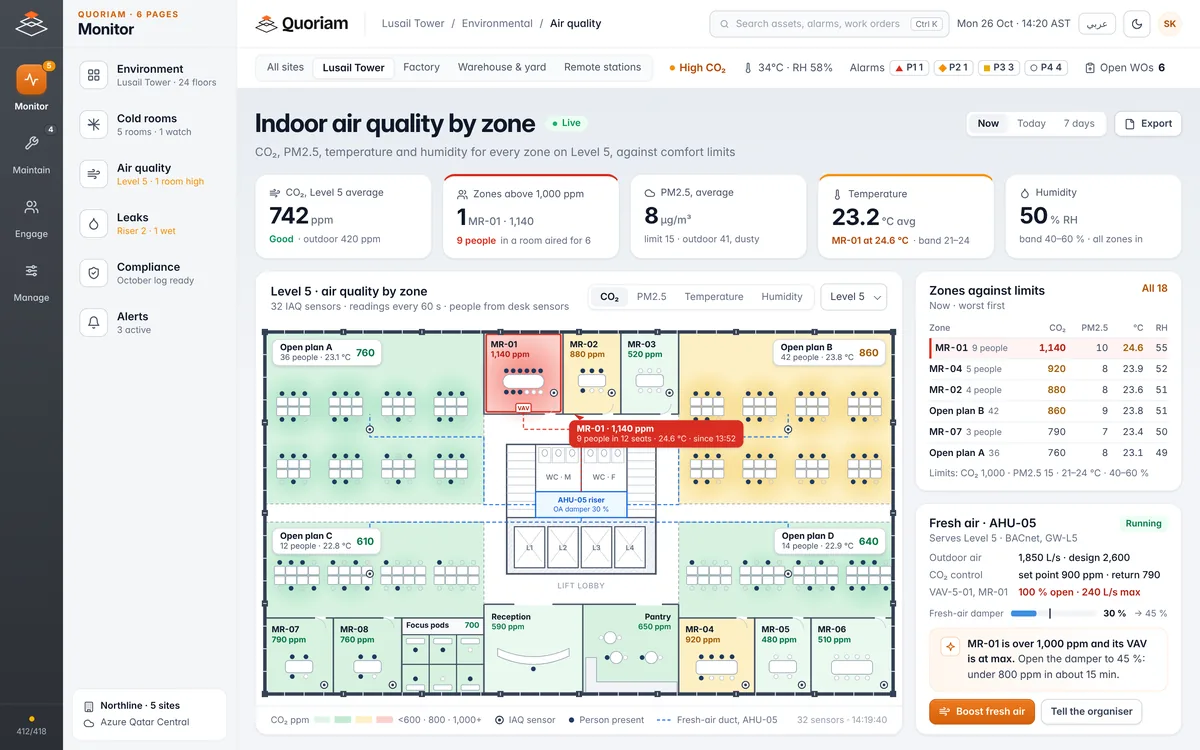
Quoriam reads the air handling units and VAV boxes from the BMS over BACnet, and people counts from occupancy sensors, so a CO2 rise is read against who is in the room.
Alert and fix
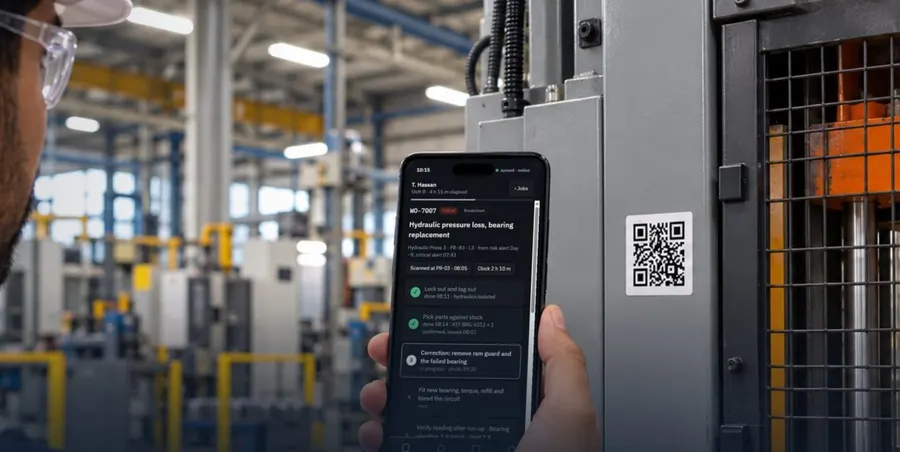
The alert names the room, how many people are in it and what its fresh-air unit is doing, and suggests the fix. Your BMS operator makes the change.
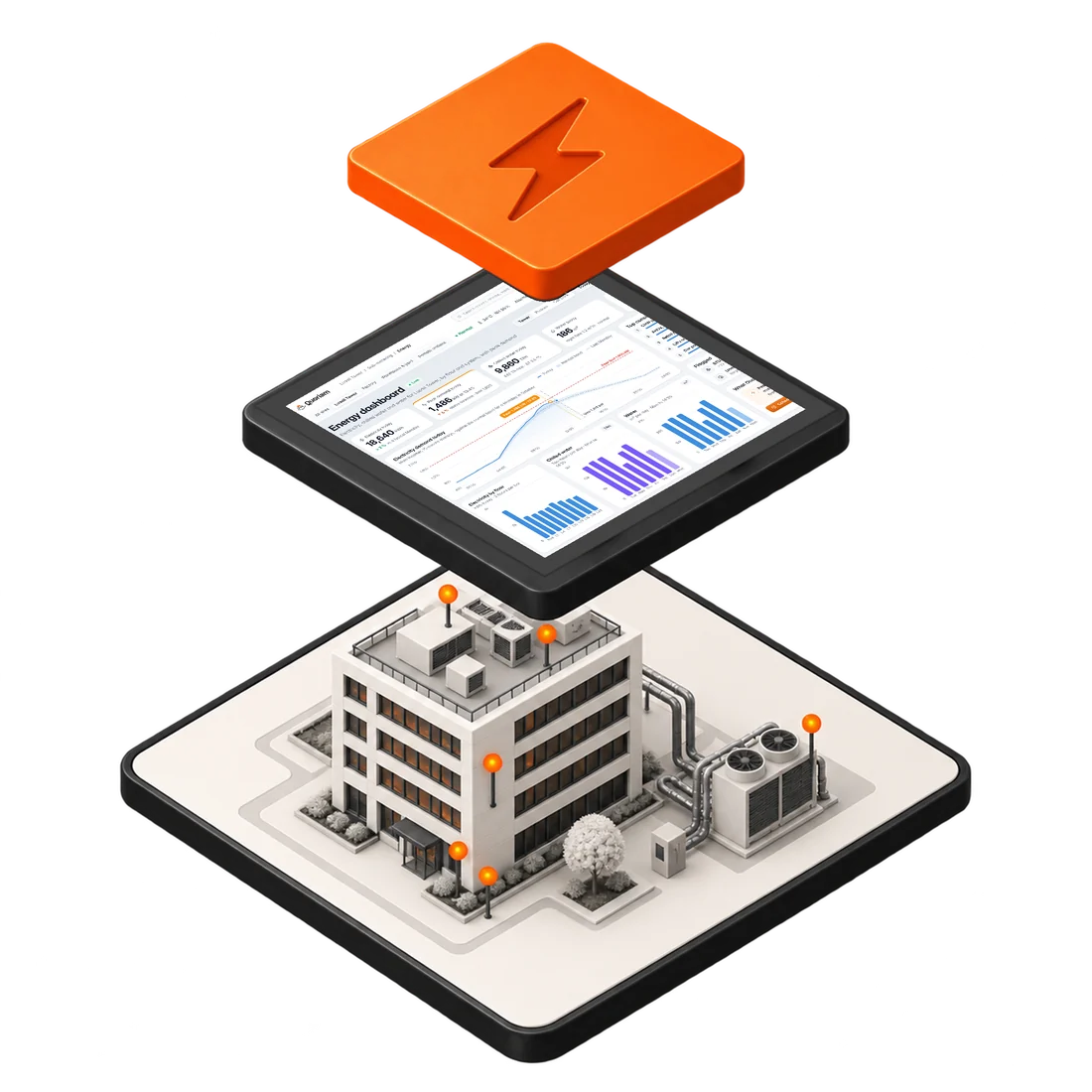
System view
For IT, OT and security reviewers: where the data goes, and how.
- In the roomWireless air quality sensors; occupancy sensors
- On siteLoRaWAN gateway; edge gateway reading the BMS over BACnet
- NetworkSite LAN or cellular, encrypted and kept apart from the control network
- Quoriam platformOn your premises or cloud hosted in Qatar
- Your team and systemsApp, SMS and email alerts; reports by PDF and CSV; work orders
What your team sees.
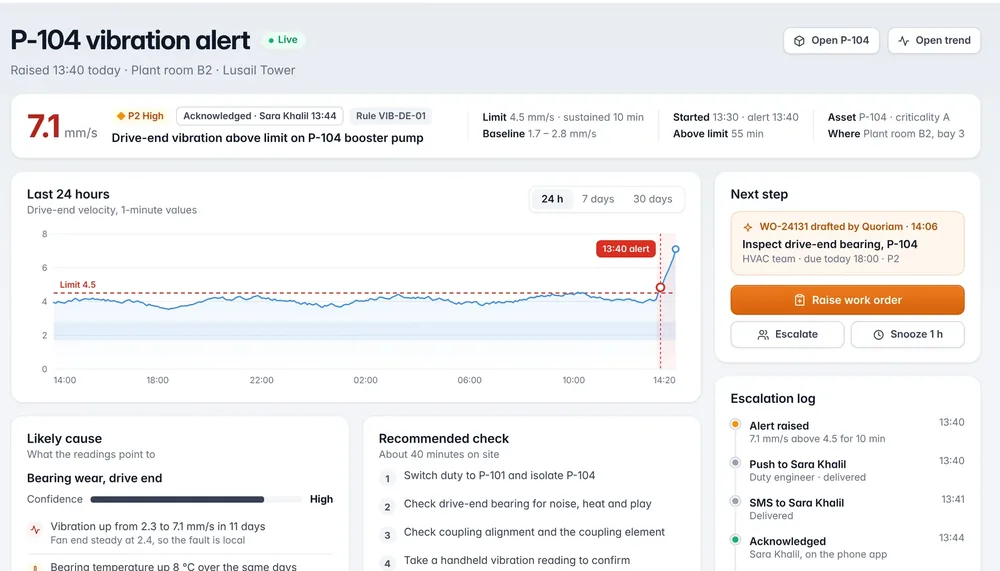
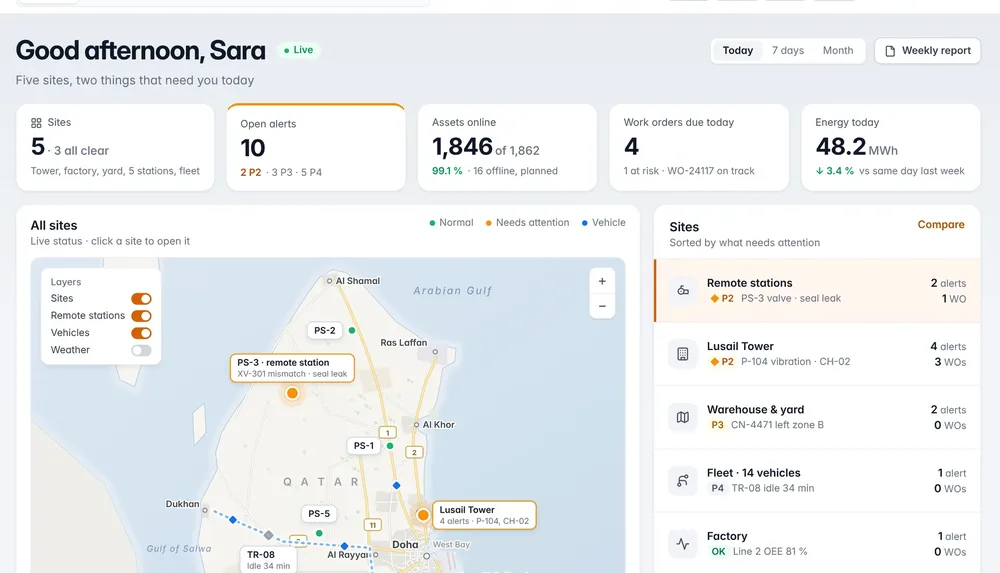
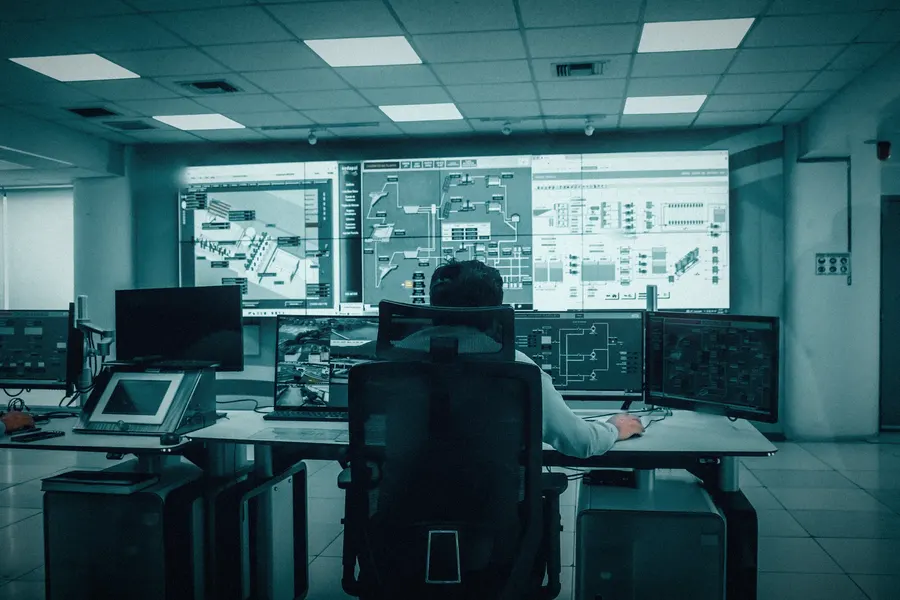
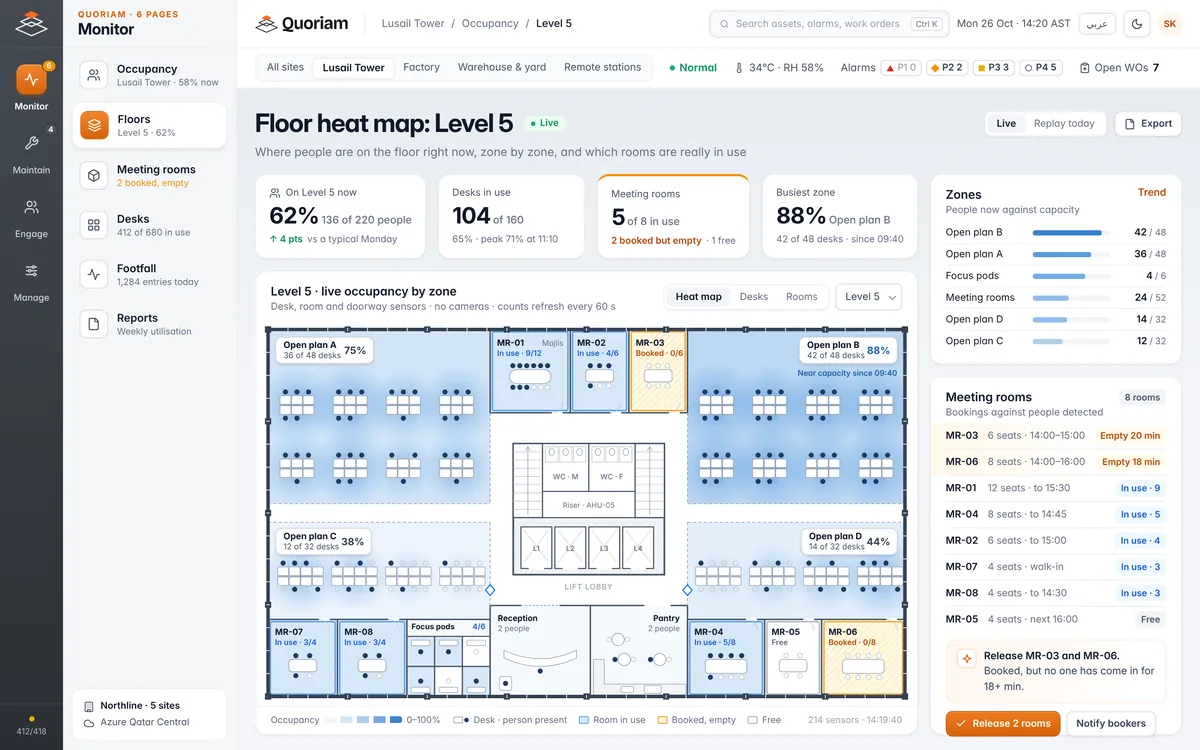
The air in every zone, the people in it, and the systems behind it.
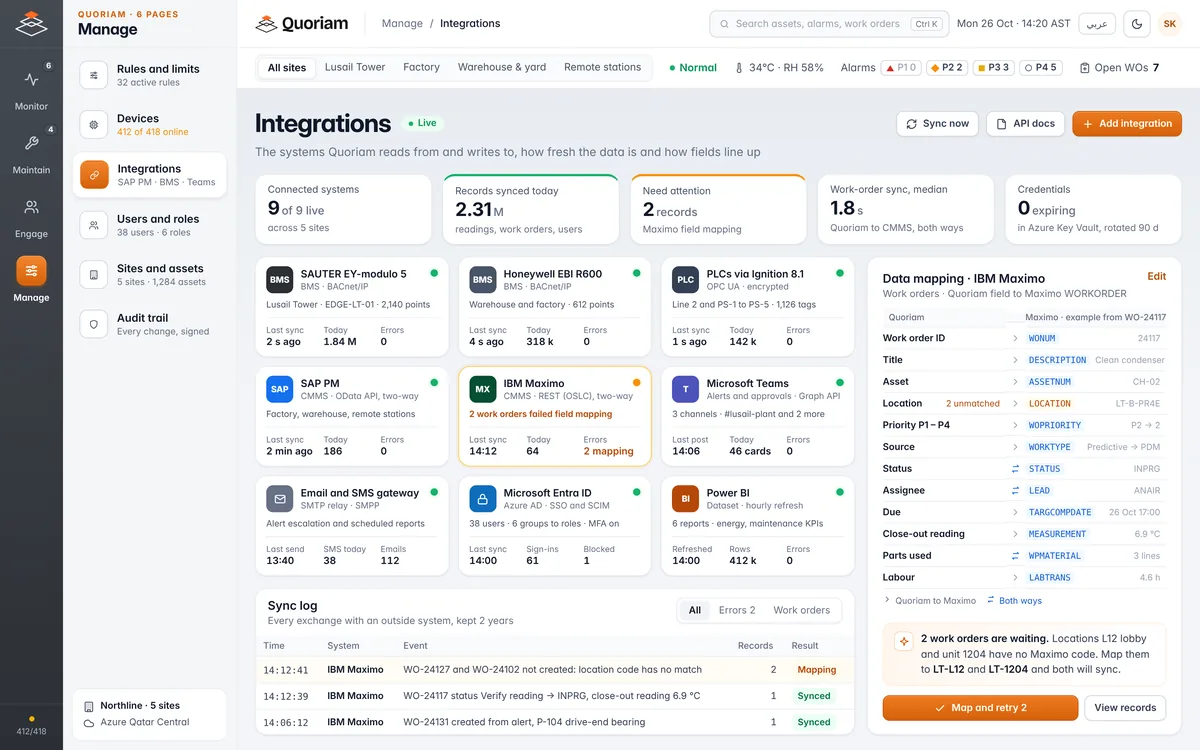
Or just ask.
Quoriam AI answers in plain language and turns the answer into an action.
Where it's used in Qatar.
Anywhere people spend the working day indoors with the windows shut.
Office towers
Meeting rooms and open-plan floors in West Bay and Lusail, where comfort complaints reach facilities first.
Facilities and smart buildingsSchools and universities
Classrooms that fill and empty on a timetable, so CO2 climbs fast in every lesson.
Hospitals and clinics
Waiting areas and offices where air quality is part of patient comfort.
HealthcarePlant and control rooms
Rooms where dust and humidity matter to the equipment as much as to the people.
Temperature and humidity monitoring
Questions buyers ask.
Something else? Ask us during the free assessment.
What is a good CO2 level indoors?
There is no legal limit. Many practitioners use 1,000 ppm as a benchmark, but NIST notes that no current ASHRAE standard contains an indoor CO2 limit and that any CO2 reference must allow for the building type and how many people use it. We set targets with you and read CO2 against the people count.
Do dust storms affect indoor air in Qatar?
They can, through filters, open doors and leaky envelopes. In a Doha study, indoor PM2.5 was on average about a third of outdoor levels, and the lowest indoor-to-outdoor ratio came during a dust event. The authors put the weak link between indoor and outdoor levels down to the building envelope (Tutsak et al., 2024). A PM2.5 sensor in each zone shows where your building lets dust in.
How many sensors do we need?
Usually one in each meeting room and classroom, and one for each zone of an open-plan floor. Rooms that fill quickly, such as boardrooms and lecture halls, matter most. The free assessment walks the floors with your facilities team and gives you the count and the price.
What hardware do you fit?
Wall-mounted wireless air quality sensors that measure CO2, PM2.5, temperature and humidity, with TVOC where you need it, on a LoRaWAN gateway such as the Quoriam Edge QE35.
Can it work with our BMS?
Yes. Quoriam reads fresh-air units, VAV boxes and their set points from the BMS over BACnet or Modbus, so an alert shows what the ventilation is doing at that moment. Changes stay with your BMS operator.
What does it cost, and can we pilot it first?
The price depends on the number of rooms and zones and on the BMS connection. The free three-week assessment ends with a fixed price, and a pilot on one floor can come first, so you see the alerts before you commit.
Related.
Indoor air quality is part of environmental monitoring on the Quoriam platform.
- Environmental monitoring
Log temperature, humidity and air quality in cold rooms, warehouses and offices, ready for audit.
- HVAC and energy optimisation
Cooling matched to occupancy and weather, measured against the meter.
- Desk and room occupancy
Which desks and meeting rooms are really used, and when.
- Facilities and smart buildings
Chillers, energy, occupancy and air quality.
Find the rooms where the air runs out.
A free three-week assessment. We walk your floors, read your BMS and recommend where air quality sensors will tell you most.
We take on two assessments a month.Quoriam is designed to pay back within six months. How we calculate payback